Developer Experience at Uber with Gautam Korlam
Developer Experience at Uber with Gautam KorlamGautam Korlam, former Uber principal engineer and Gitar co-founder, joins the podcast to discuss scaling engineering teams, the challenges of monorepos, and how AI is reshaping developer productivity.
Stream the Latest EpisodeListen and watch now on YouTube, Spotify and Apple . See the episode transcript at the top of this page, and a summary at the bottom. Brought to You By
— In This EpisodeIn today’s episode of The Pragmatic Engineer, I am joined by former Uber colleague, Gautam Korlam. Gautam is the Co-Founder of Gitar, an agentic AI startup that automates code maintenance. Gautam was mobile engineer no. 9 at Uber and founding engineer for the mobile platform team – and so he learned a few things about scaling up engineering teams. We talk about: • How Gautam accidentally deleted Uber’s Java monorepo – really! • Uber's unique engineering stack and why custom solutions like SubmitQueue were built in-house • Monorepo: the benefits and downsides of this approach • From Engineer II to Principal Engineer at Uber: Gautam’s career trajectory • Practical strategies for building trust and gaining social capital • How the platform team at Uber operated with a product-focused mindset • Vibe coding: why it helps with quick prototyping • How AI tools are changing developer experience and productivity • Important skills for devs to pick up to remain valuable as AI tools spread • And more! 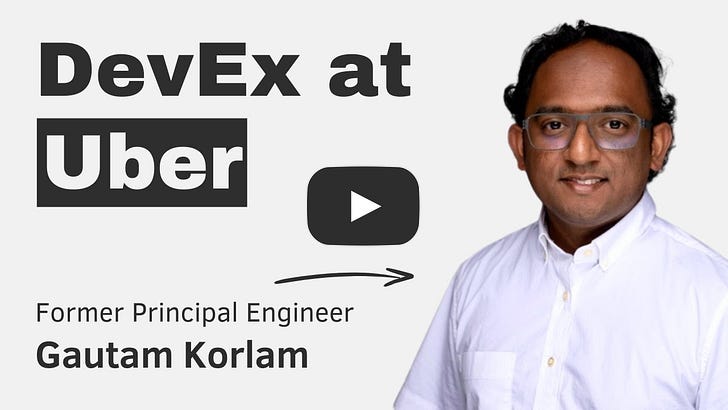 TakeawaysInteresting parts of the conversation: 1. Submit Queue: Uber bult a complex merge system to dela with the large number of commits, where each commit had to run long-running CI tests. It’s a problem that smaller and mid-sized companies don’t have, but Uber had: and so they scratched their own itch. 2. Local Developer Analytics (LDA): years ago, Uber started to measure the experience that devs had. Like how long did a build take, locally? How much CPU is used? They used this data to improve internal tooling. 3. Developer experience as a product team. Gautam’s team operated like a classic product team: except their customers were Uber’s internal developers. Gautam believes this is how all successful platform teams should work. 4. AI changing software development: this is happening. “Vibe coding” leads to faster prototyping. Gautam believes junior engineers will thrive with AI tools because they will hit the ground running faster, and will be free of biases that hold back more experienced developers. The Pragmatic Engineer deepdives relevant for this episodeTimestamps(00:00) Intro (02:11) How Gautam accidentally deleted Uber’s Java Monorepo (05:40) The impact of Gautam’s mistake (06:35) Uber’s unique engineering stack (10:15) Uber’s SubmitQueue (12:44) Why Uber moved to a monorepo (16:30) The downsides of a monorepo (18:35) Measurement products built in-house (20:20) Measuring developer productivity and happiness (22:52) How Devpods improved developer productivity (27:37) The challenges with cloud development environments (29:10) Gautam’s journey from Eng II to Principal Engineer (32:00) Building trust and gaining social capital (36:17) An explanation of Principal Engineer at Uber—and the archetypes at Uber (45:07) The platform and program split at Uber (48:15) How Gautam and his team supported their internal users (52:50) Gautam’s thoughts on developer productivity (59:10) How AI enhances productivity, its limitations, and the rise of agentic AI (1:04:00) An explanation of Vibe coding (1:07:34) An overview of Gitar and all it can help developers with (1:10:44) Top skills to cultivate to add value and stay relevant (1:17:00) Rapid fire round A summary of the conversationUber's engineering culture and tools
Developer experience and dev productivity
Career growth to Principal Engineer
The impact of AI on software development
Where to find Gautam Korlam: • LinkedIn: https://www.linkedin.com/in/gautamkorlam/ Mentions during the episode: • Bypassing Large Diffs in SubmitQueue: https://www.uber.com/blog/bypassing-large-diffs-in-submitqueue/ • Jenkins: https://en.wikipedia.org/wiki/Jenkins_(software) • Devpods: https://www.uber.com/blog/devpod-improving-developer-productivity-at-uber/ • JetBrains: https://www.jetbrains.com/ • Cloud Development Environments: https://newsletter.pragmaticengineer.com/p/cloud-development-environments • Why are Cloud Development Environments Spiking in Popularity, Now?: https://blog.pragmaticengineer.com/why-are-cloud-development-environments-spiking-in-popularity-now/ • “The Coding Machine” at Meta with Michael Novati: https://newsletter.pragmaticengineer.com/p/the-coding-machine-at-meta • Software Architect Archetypes: https://newsletter.pragmaticengineer.com/p/software-architect-archetypes • The Platform and Program Split at Uber: A Milestone Special: https://newsletter.pragmaticengineer.com/p/the-platform-and-program-split-at • What is Vibe Coding? How Creators Can Build Software Without Writing Code: https://alitu.com/creator/workflow/what-is-vibe-coding/ • WhatsApp: https://www.whatsapp.com/ • Rust: https://www.rust-lang.org/ • I am excited to introduce Jimy by Gitar - The agentic AI for building better software: https://www.linkedin.com/posts/gautamkorlam_i-am-excited-to-introduce-jimy-by-gitar-activity-7297713117927481344-0G4l/ • Cursor: https://www.cursor.com/ • Claude: https://claude.ai/ • Deepseek: https://www.deepseek.com/ • Head First Design Patterns: A Brain-Friendly Guide: https://www.amazon.com/Head-First-Design-Patterns-Brain-Friendly/dp/0596007124 — Production and marketing by Pen Name. For inquiries about sponsoring the podcast, email podcast@pragmaticengineer.com. You’re on the free list for The Pragmatic Engineer. For the full experience, become a paying subscriber. Many readers expense this newsletter within their company’s training/learning/development budget. This post is public, so feel free to share and forward it. If you enjoyed this post, you might enjoy my book, The Software Engineer's Guidebook. Here is what Tanya Reilly, senior principal engineer and author of The Staff Engineer's Path said about it:
|


%26stroke%3Dnone%26strokeWidth%3D3.6)






Comments
Post a Comment