The Pragmatic Engineer 2025 Survey: What’s in your tech stack? Part 2
Hi – this is Gergely with the monthly, free issue of the Pragmatic Engineer Newsletter. In every issue, I cover challenges at Big Tech and startups through the lens of senior engineers and engineering leaders. If you’ve been forwarded this email, you can subscribe here. Many subscribers expense this newsletter to their learning and development budget. If you have such a budget, here’s an email you could send to your manager. The Pragmatic Engineer 2025 Survey: What’s in your tech stack? Part 2Tools software engineers use for project management, communication and collaboration, databases and backend infrastructure. Reader survey with analysis, based on 3,000+ responses
During April and May, we asked readers of this newsletter about the tools in your tech stack and your opinions of them. We reported some results in Part 1 of this mini series, and today, we look into more metrics contained in the circa 3,000 responses. A big thanks to everyone who took the time to fill out the survey. We cover:
As a reminder, in the first of these articles on The Pragmatic Engineer 2025 survey, we covered:
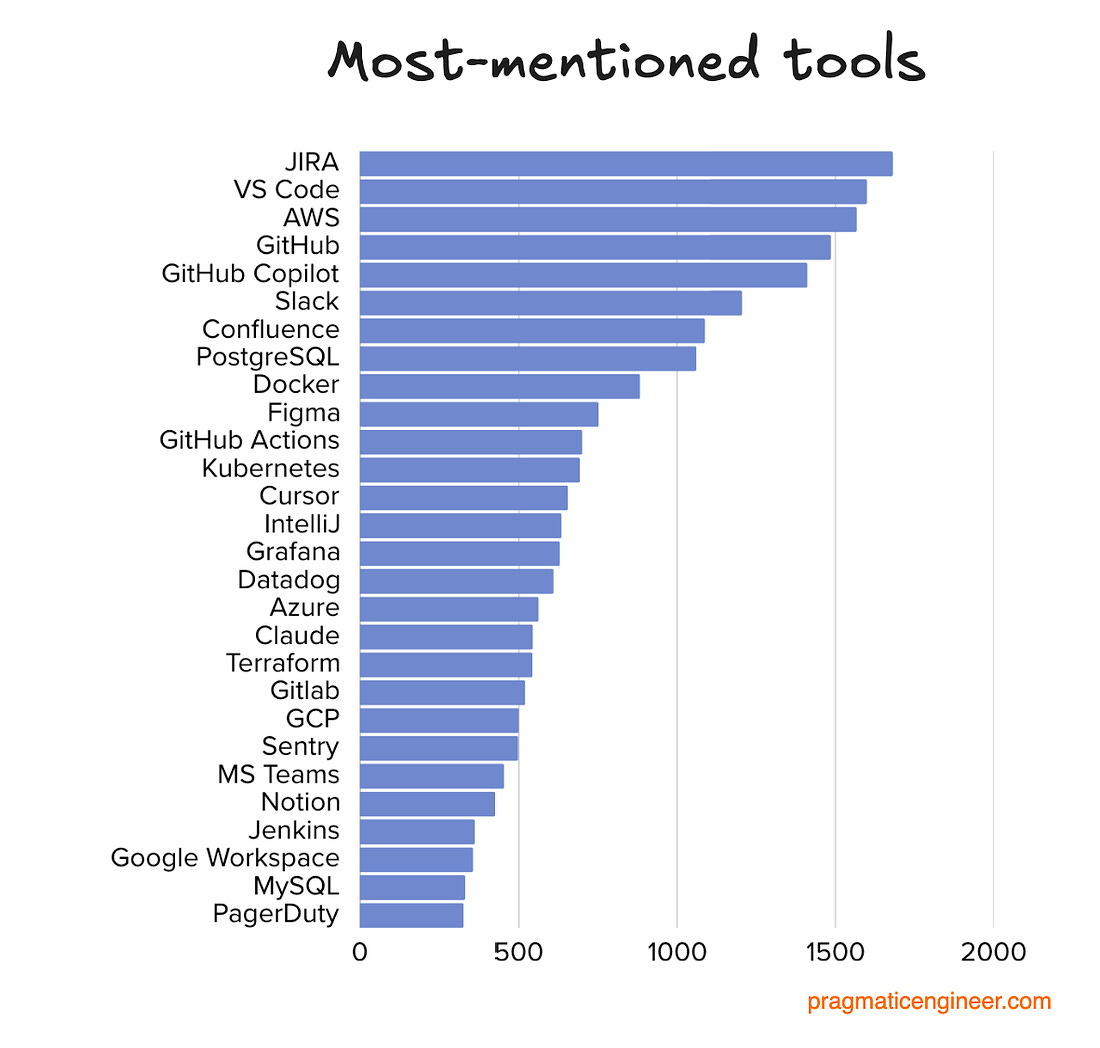
The bottom of this article could be cut off in some email clients. Read the full article uninterrupted, online. 1. Most-mentioned toolsBelow is a summary of the most-mentioned tools from around 3,000 survey respondents. Everyone mentioned several tools, and this chart lists those cited by at least 10% of respondents (300):
The biggest surprises for me:
Other observations on the most-used tools:
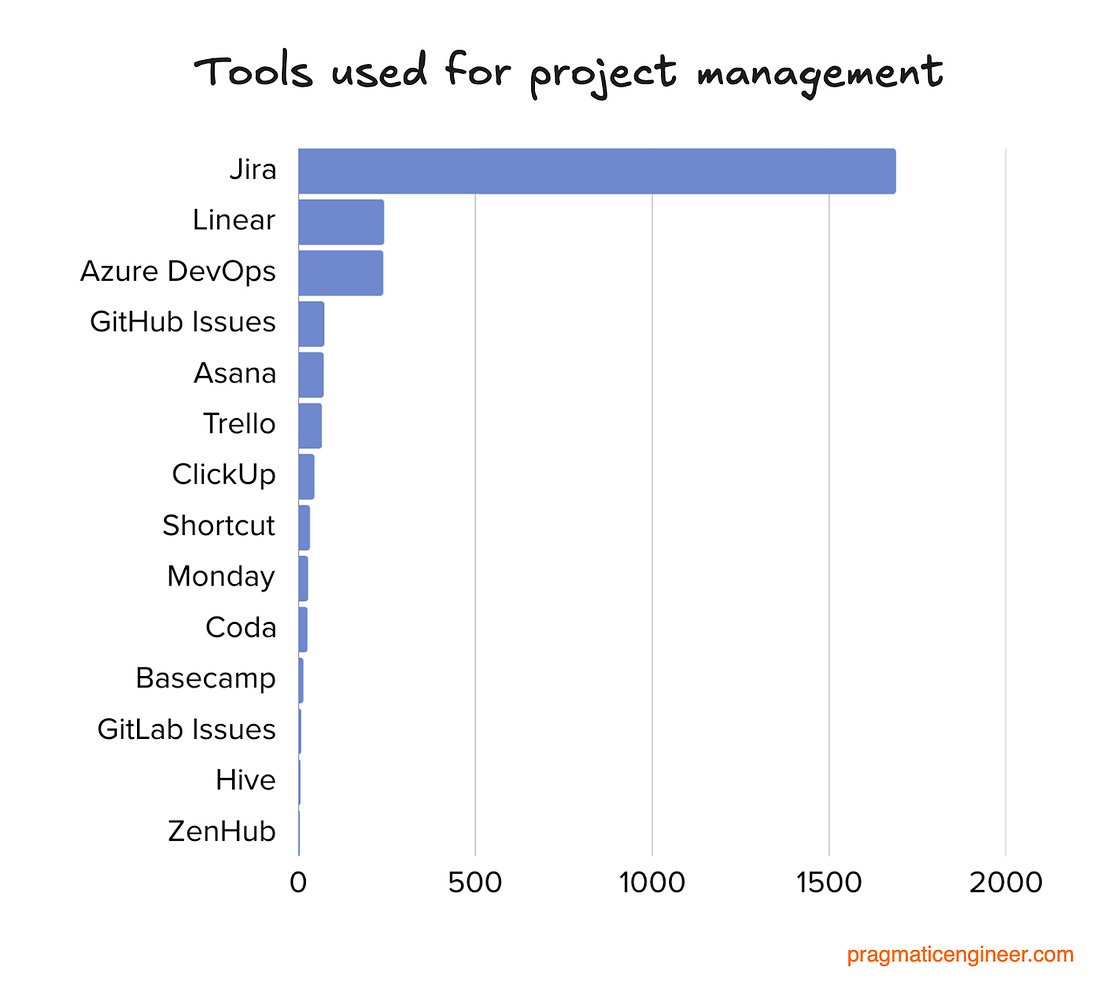
2. Project managementPart 1 of the survey results found that JIRA is the “most disliked tool” among developers, based on the number of negative mentions subtracted by the number of positive mentions. This suggests that many engineers using JIRA don’t want to use it but have no choice, which makes sense because it’s often engineering leaders, product folks, or the CEO who select project management software. Smaller competitor Linear is the 4th most-loved tool. Let’s look closer at which tools software engineers use for project management:
Tools mentioned:
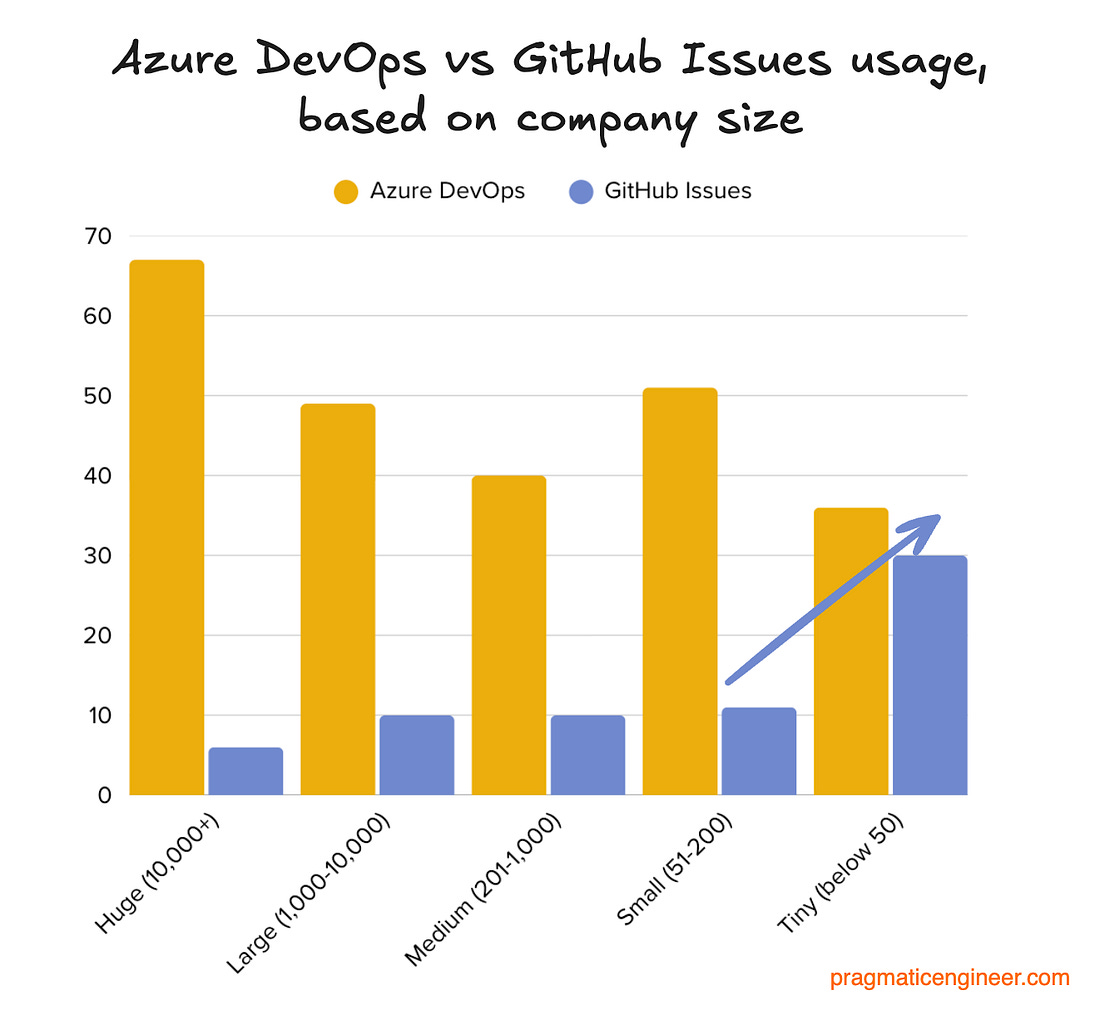
Azure DevOps is a surprisingly big hit for a product tied to Azure. Almost three times as many people use Azure DevOps as use GitHub Issues, despite GitHub having a much larger overall market share. Granted, Azure DevOps supports CI/CD as well as project management, but it’s still noteworthy how popular the tool is. Looking closer, GitHub Issues seems to be popular at very small teams (50 or smaller) and Azure DevOps is a lot more used at larger companies:
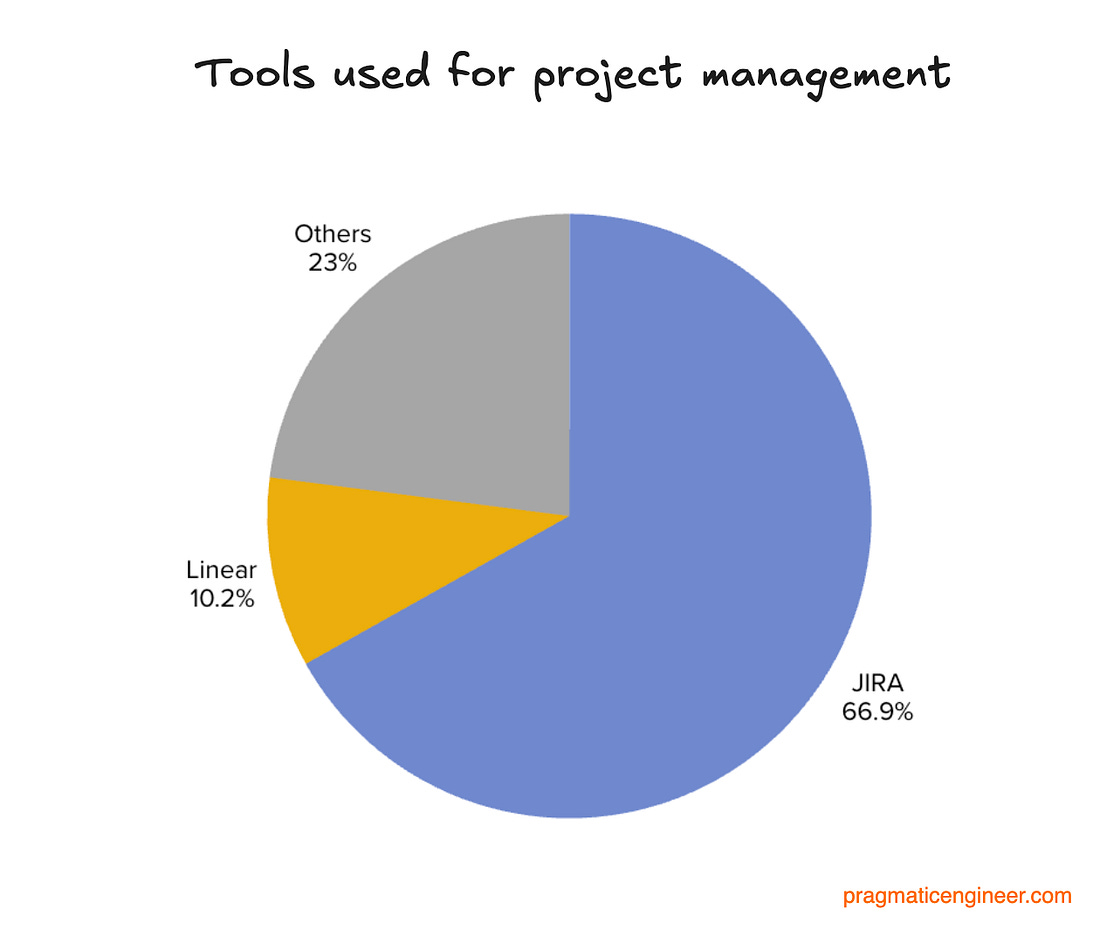
Both Azure DevOps and GitHub are built by Microsoft, and the popularity of Azure DevOps makes me wonder if Microsoft may one day try to push Azure DevOps on GitHub users more, or integrate GitHub Issues to serve as an onboarding to Azure DevOps. Both might make business sense. Linear is used far more by devs than its higher-valued publicly traded competitors. What I find curious is that Linear is valued at a comparatively modest $1.25B, while having far more developers using its project management solution than who use publicly traded competitors Asana (market cap $3.25B), and Monday.com ($9B.) This suggests Asana and Monday.com are more popular outside of software engineering. If we take just JIRA and Linear, the pair account for close to 75% of tooling usage in this survey:
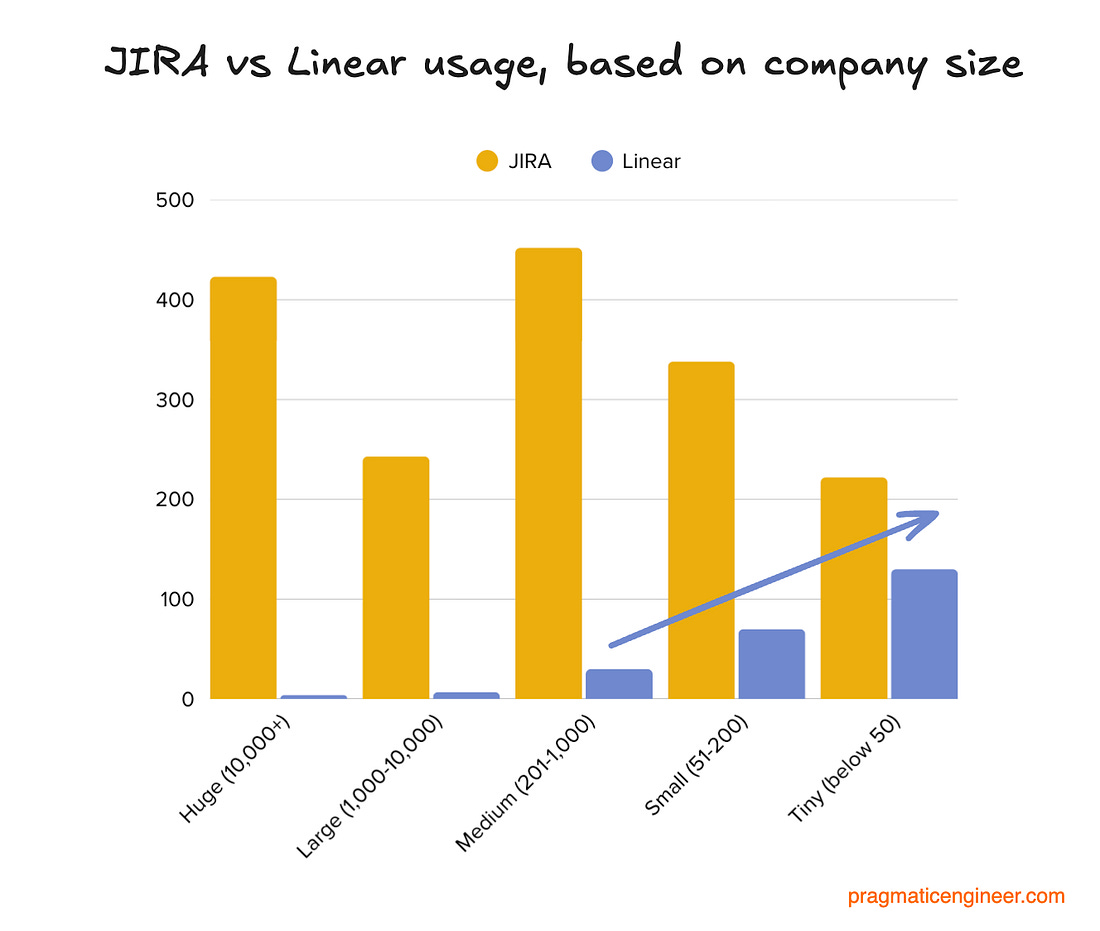
JIRA dominates at large companies, while Linear is surging at smaller ones this year. Let’s see how often JIRA and Linear are mentioned, by company size:
Linear is almost as popular at “tiny” companies (50 or fewer employees) as JIRA. At the same time, at workplaces with 1,000+ people, Linear is close to nonexistent. In the survey, developers at larger companies said they wish they could use Linear instead of JIRA. Here’s what two developers at larger companies think:
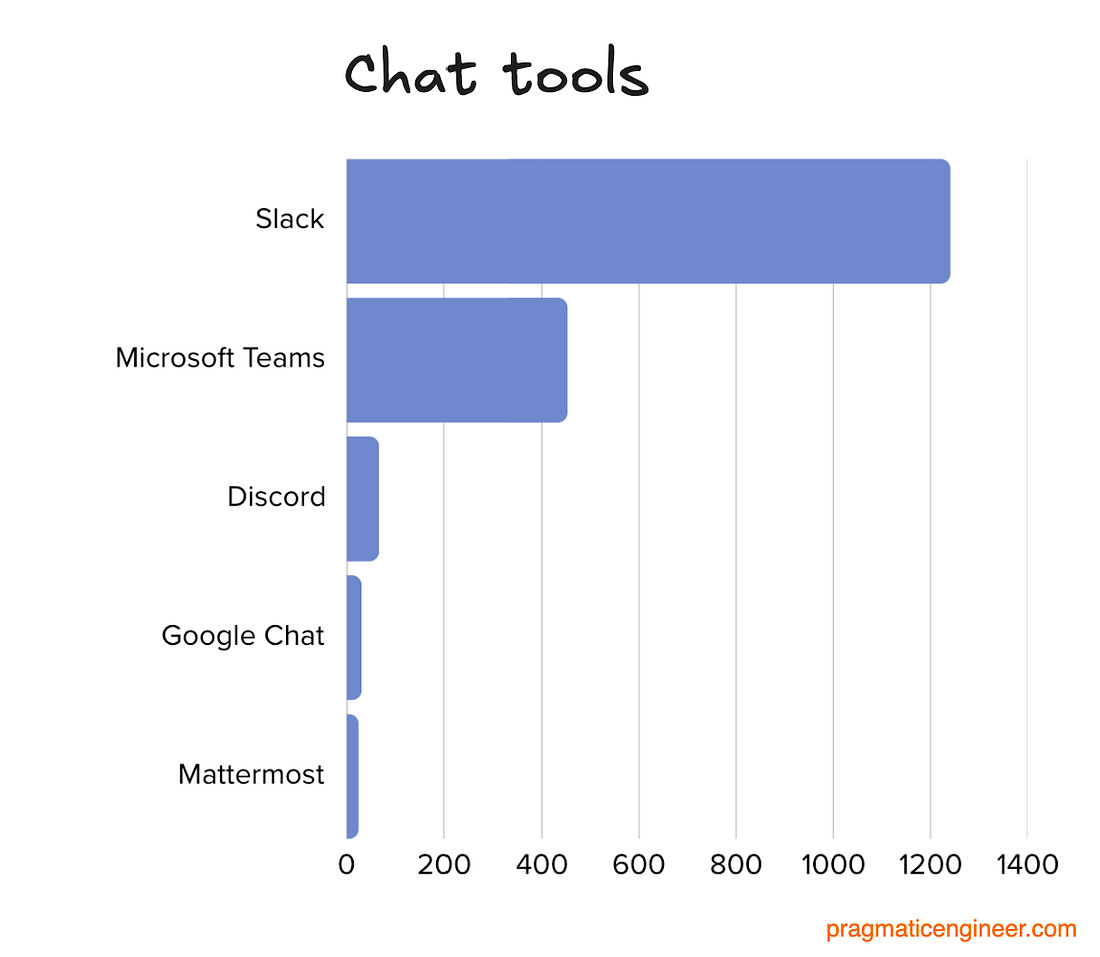
One surprising finding is that even the smallest companies are still just about more likely to use JIRA than any other tool. It has managed to become synonymous with project management, and the default choice for many companies of all sizes. 3. Communication and collaborationHere are the chat, video, document editing, and other communication-related tools which developers frequently use. ChatSlack dominates chat tools, with Microsoft Teams a distant second:
Other tools:
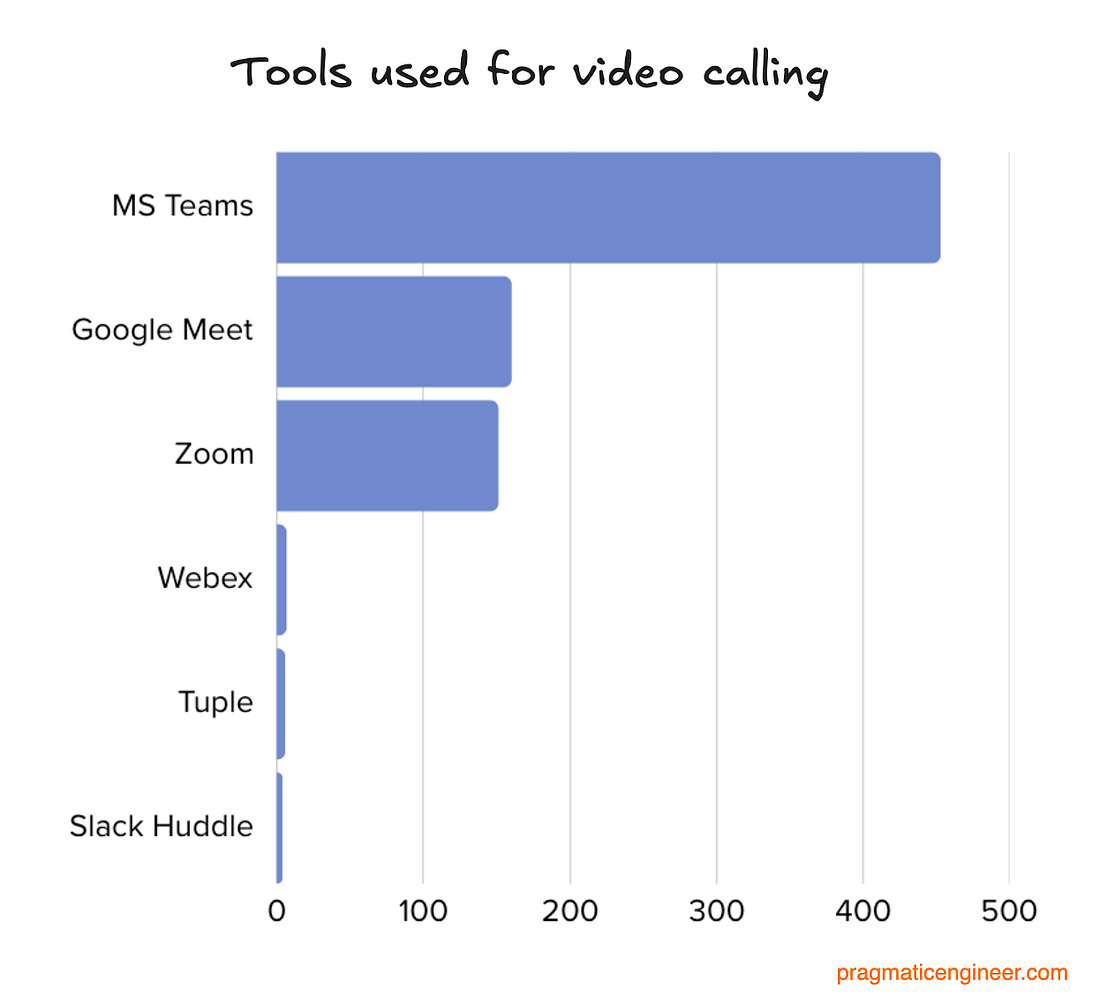
Video callingOnly around a quarter of respondents named any tools for video calling (775 respondents). MS Teams is most popular:
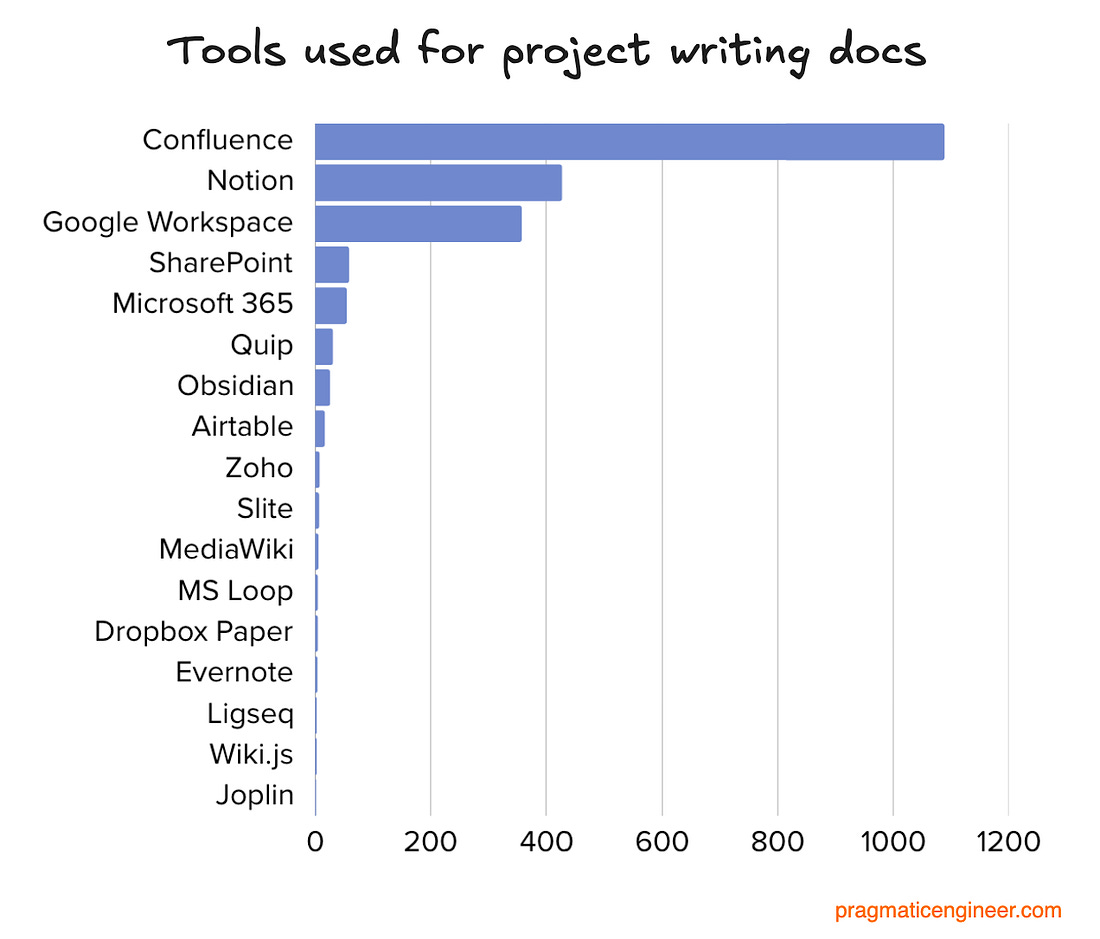
Comparison in this category is a little tricky because MS Teams is a chat and video calling tool, while Google Meet and Zoom are solely for video calls. Other mentions include Cisco’s Webex, Tuple (a remote pair programming tool), and Slack Huddle (multi-person screen sharing, a feature inside Slack) It’s surprising that Google Meet is more mentioned than Zoom because Zoom’s bread-and-butter is video calling, whereas Google Meet is a free Google Workspace add-on. Could we be seeing the search giant and Microsoft slowly but surely capturing Zoom’s market share – at least within tech companies? DocsWhat developers use for writing documents:
Most-mentioned tools:
Confluence being so popular surprised me, not least because it’s the third most-disliked tool in our survey – although it’s also the most popular wiki and documentation tool among all companies. Seamless integration with JIRA – and being bundled as part of the Atlassian suite – seems more decisive in businesses adopting Confluence than developers’ complaints about it are. The long tail of tools below is indeed lengthy, and each one was mentioned by under 1% of respondents (30 mentions)
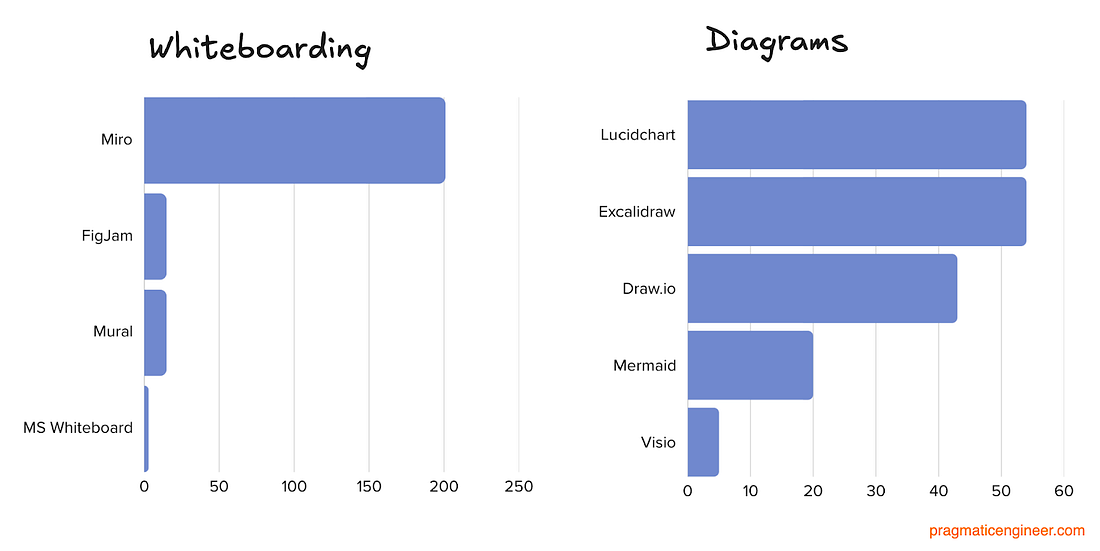
Whiteboarding and diagrams
For whiteboarding, Miro is the most-mentioned by survey respondents. Alternatives used by developers include:
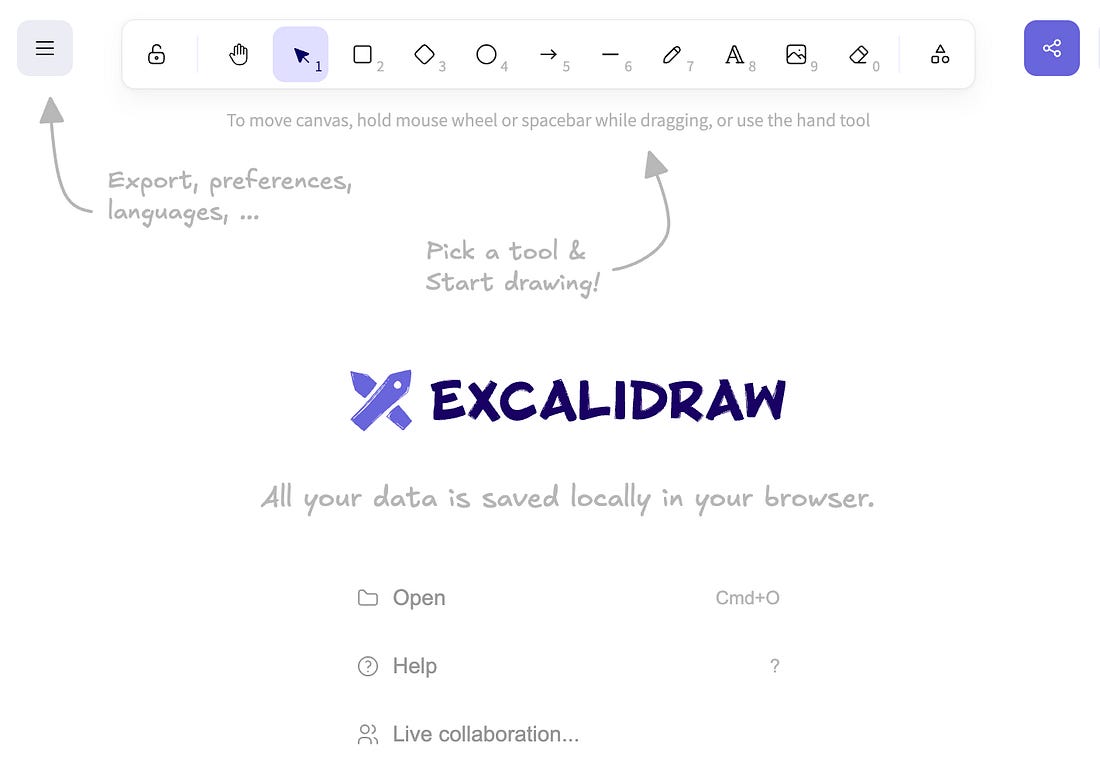
For creating diagrams, Lucidchart, Excalidraw, and Draw.io are equally popular, while there are honorary mentions for Mermaid (which renders Markdown into diagrams) and Microsoft’s Visio.
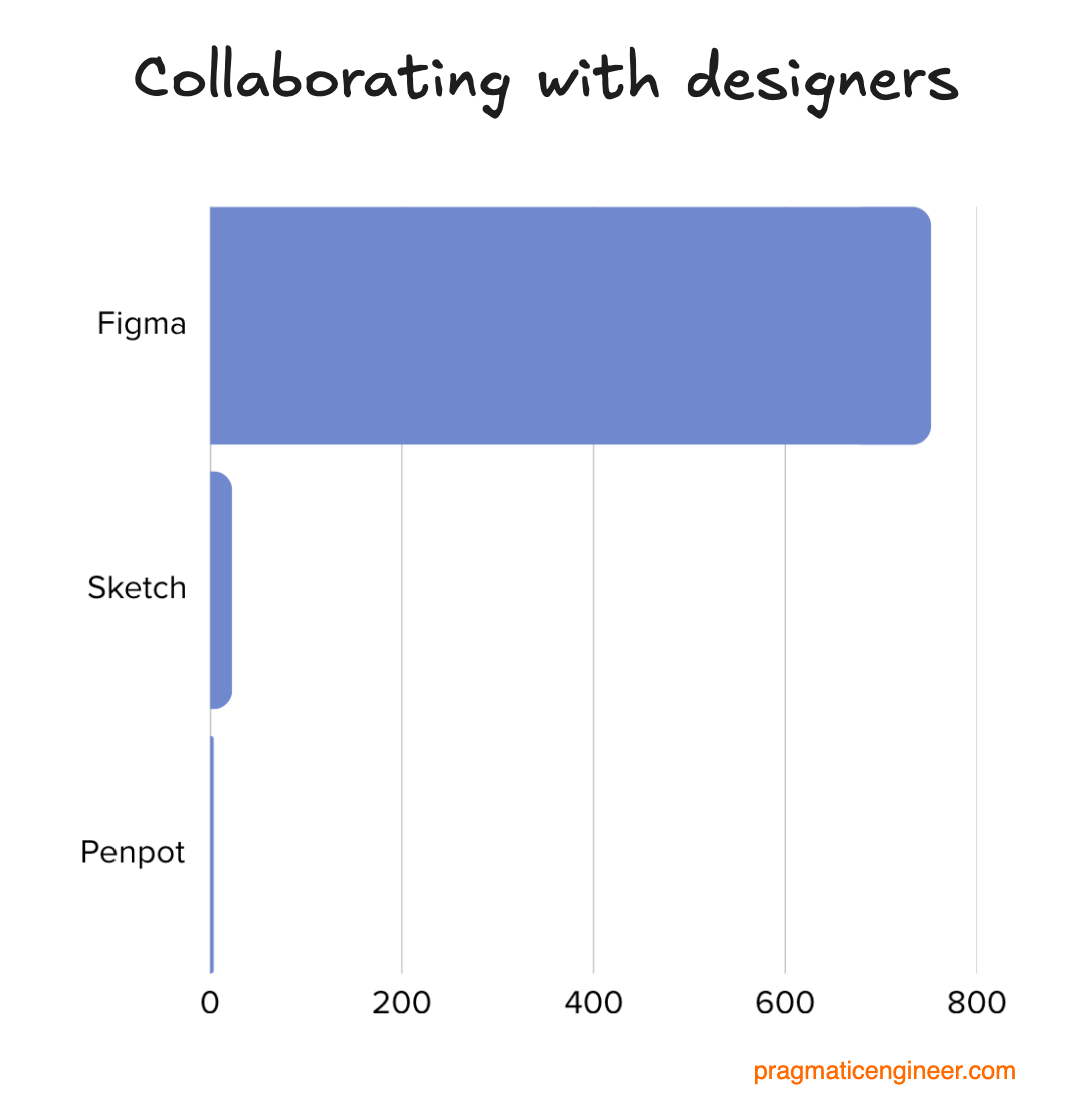
Working with designThe category of tools for collaborating with design is not even a contest:
In this category, 97% of all responses were for Figma. Meanwhile, Sketch (UX tool exclusive to MacOS) and Penpot (open source Figma alternative) also gained a few mentions.
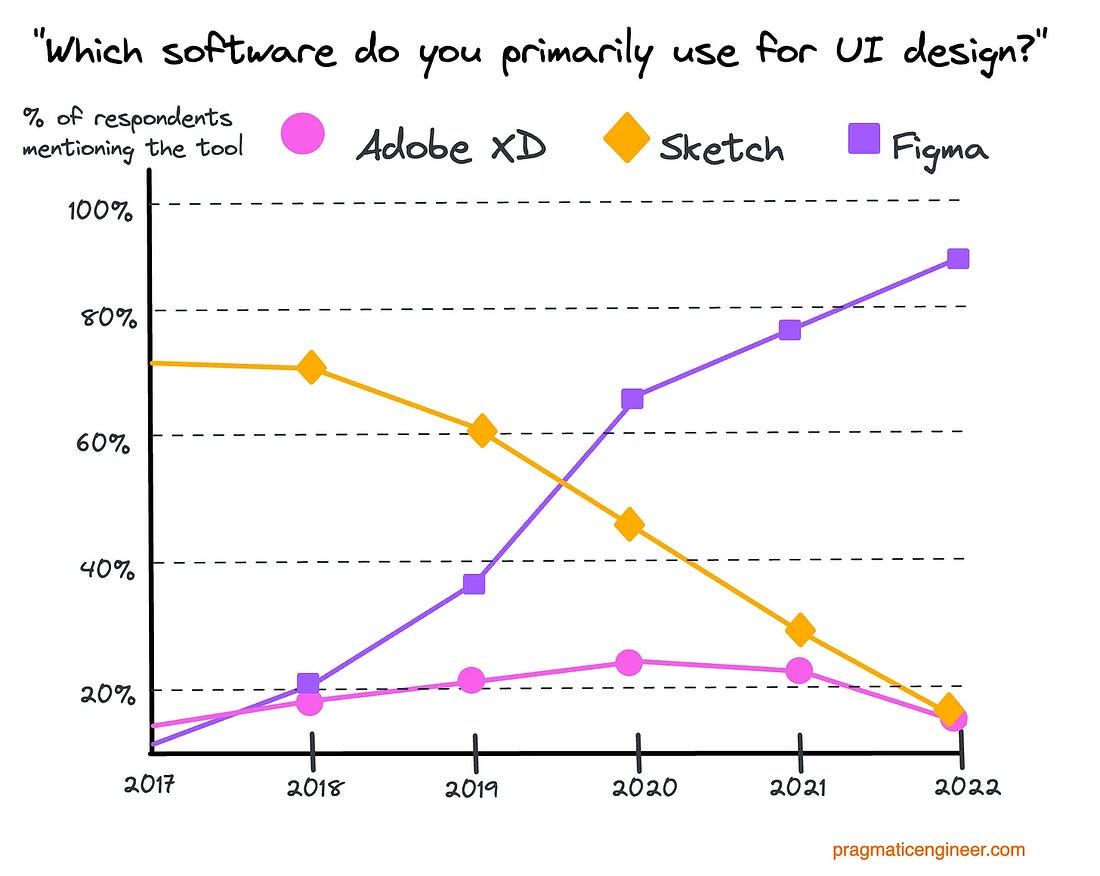
Figma has taken the design sector by storm since its public launch in 2017. Its biggest competitor today is Sketch, although “competition” seems to be pushing it a bit. Below is a visualization of just how fast Figma has won the market with its collaborative editor which works in browsers; something that no competitors could, or would, build:
We did a deepdive into Figma’s engineering culture, and a podcast episode on How Figma Slides was built. 4. Databases and data storesIn Part 1 of the survey, we covered cloud providers, PaaS, and IaaS, with AWS being the most popular provider, followed by Azure and GCP. Let’s look further into the specific tools which respondents use; there is a wide spread of types of databases which engineers prefer:
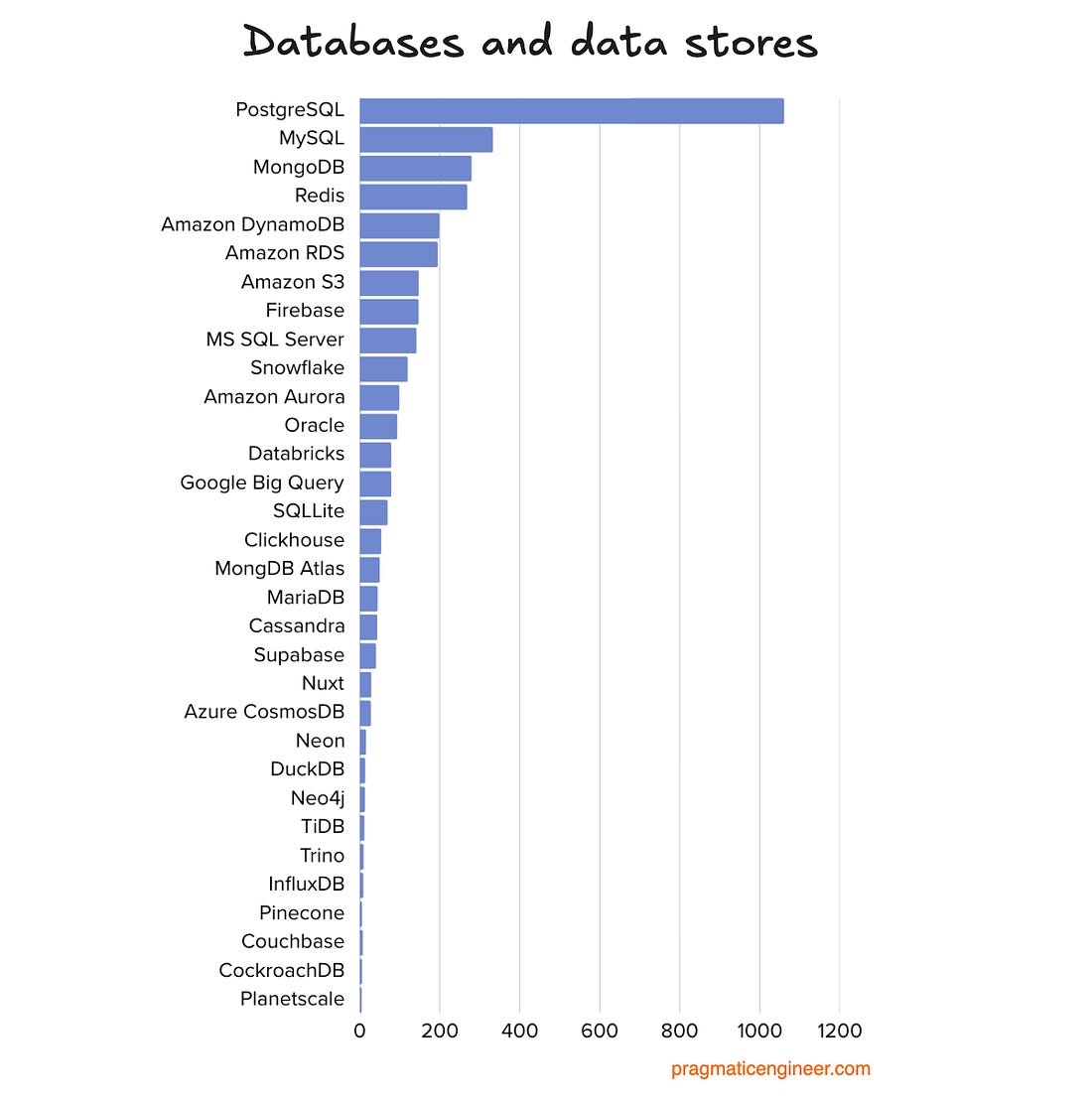
A whopping 35 databases were mentioned by at least 6 people:
There is an overwhelming choice of databases. What’s great to see is that there’s no shortage of mature, production-ready databases to choose from. Just figure out your requirements and which specialized use cases you need to support, and there’s sure to be a tool purpose-built for your use case. With so much on offer, you’ll likely not want to build your own database, although it can sometimes be hard to resist the temptation! For example, we covered how observability startup Honeycomb built its own database in this podcast episode with CTO, Charity Majors. Despite 100+ alternatives, PostgreSQL remains the default database choice for most teams. One in three respondents use PostgreSQL – and no other database technology comes close in popularity. PostgreSQL is open source, with a large number of extensions that can add functionality – from support for full text search, to support for hypothetical indexes, you’ll probably find extensions that solve your problems. And you can also build your own. Managed platforms for running Postgres are also popular: Amazon RDS, Supabase, and Neon are all examples. It seems that vector databases haven’t taken off, even as LLM applications are doing so; at least, the survey results say that vector-only databases like Pinecone and Weaviate are little used. This is likely because relational databases like PostgreSQL added vector support which works well enough – and most LLM applications can just store embeddings as vectors in these relational databases, or by using extensions like the Pgvector extension for Postgres, or the Atlas Vector Search addon for MongoDB. We previously analyzed relational databases as a good fit for vector storage in The Pulse #99. There’s no “right” choice for which database to use. To emphasize the sheer variety on offer, here are ones mentioned in the survey by 6 respondents or fewer (0.2% of the total) – but which are used successfully:
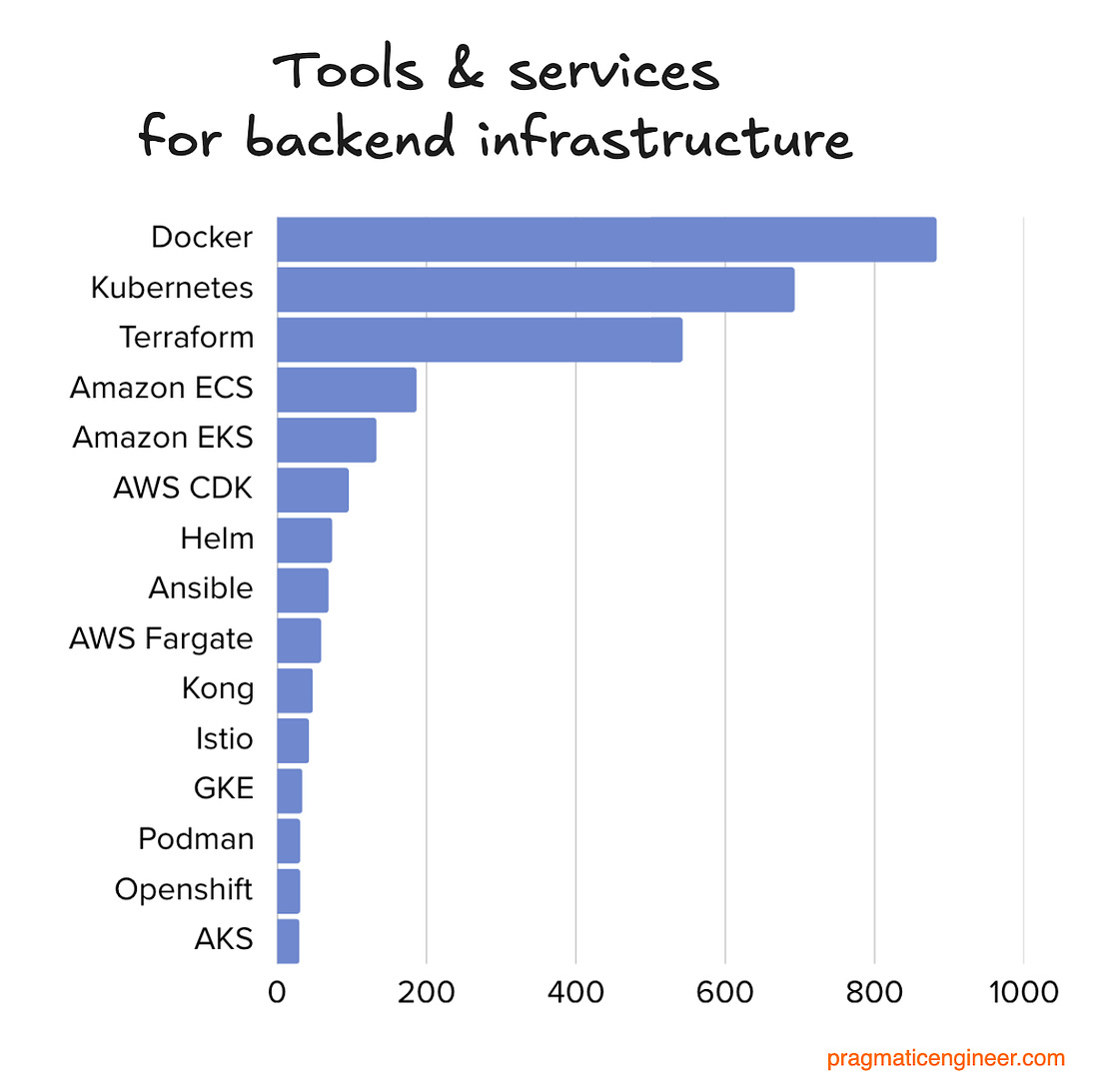
5. Backend infrastructureThe most-mentioned backend infra tools:
The tools:
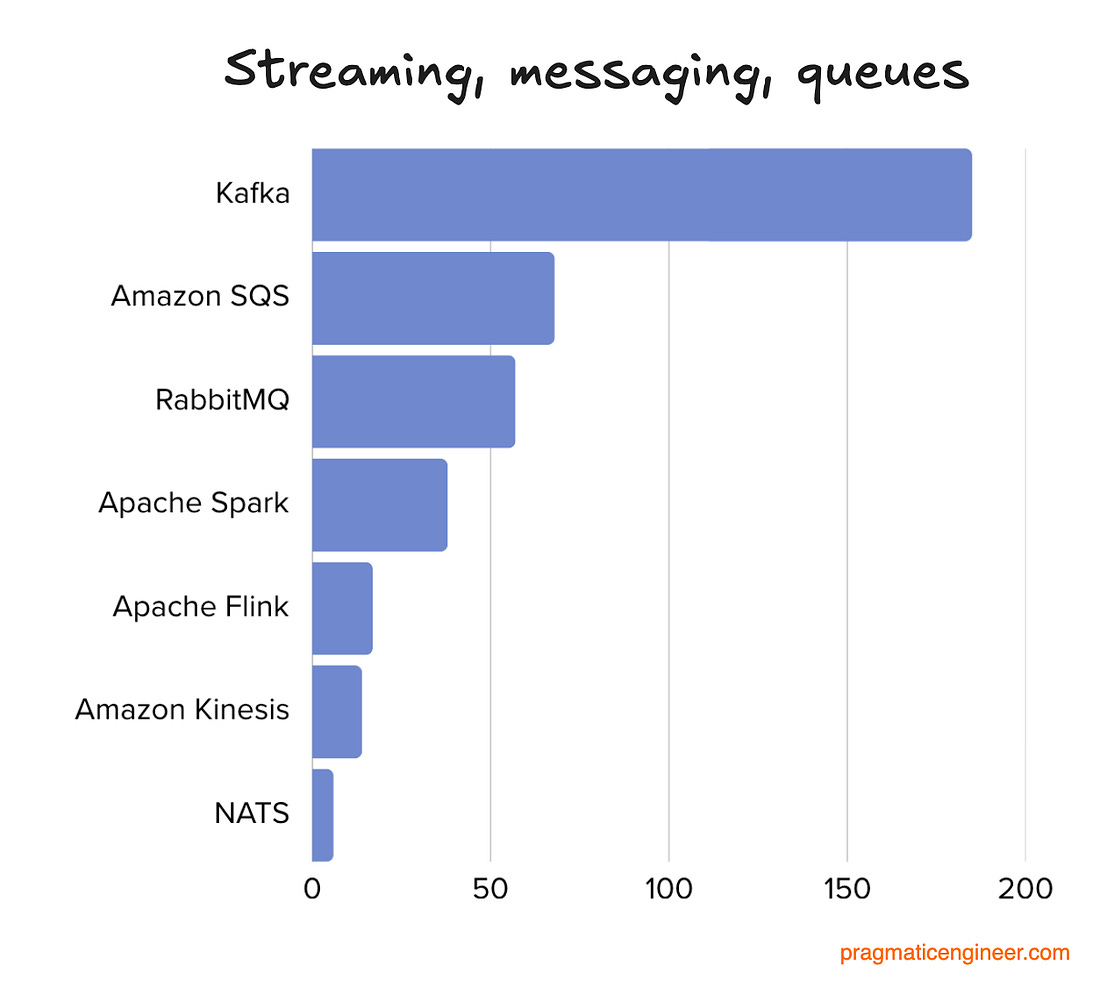
The popularity of AWS services is a bit surprising. We know AWS is the leading cloud provider, but it was still unexpected to see so many AWS services mentioned by hundreds of respondents each, such as ECS, EKS, EC2, and Fargate. A frequent complaint of AWS is that too many services are listed across the AWS panel for navigating them to be efficient, but I reckon devs building on top of AWS have their own set of preferred AWS services. Maybe AWS offering more than 240 services (and growing) reflects this demand? Containerization is widespread, and Kubernetes is the most common approach to managing containers. When it comes to building scalable infrastructure, containers are the most common way to go. When it comes to containers, they are most commonly Docker ones. And for managing containers at scale, the most common tool of choice is Kubernetes. We do a deepdive on Kubernetes in the Pragmatic Engineer Podcast episode, How Kubernetes is built. Streaming, messaging, queuesSending messages between backend services is important to get right between microservices. Here are the most popular tools and services developers use for this task:
Tools mentioned:
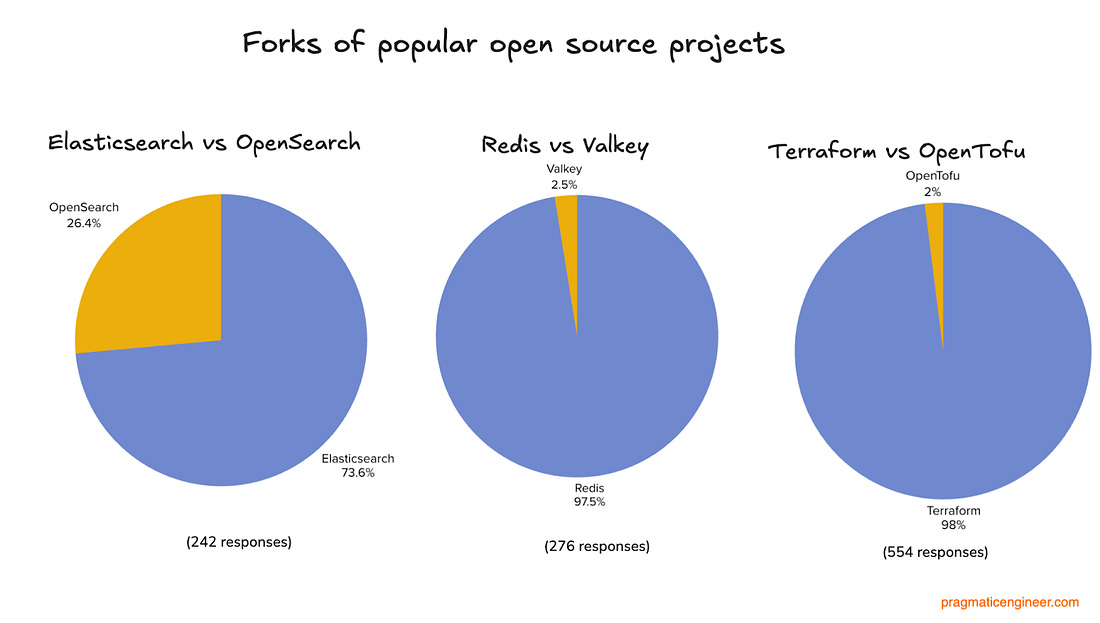
6. How are forks of popular open source infra projects doing?In recent years, several open source projects have changed their licenses to be more restrictive, including Elasticsearch, Redis, and Terraform. In each case, new forks were then created:
Here are the market shares of forks in this survey, based on numbers of mentions:
Open source forks seem to get little traction, except for Elasticsearch. The popularity of OpenSearch is likely to do with AWS: in 2021, Elasticsearch changed its license to no longer allow AWS to offer a managed Elasticsearch service without paying Elastic a licensing fee. In response, AWS started to offer a managed OpenSearch service and launched the Amazon OpenSearch Engine, which integrates nicely with AWS services like S3, Lambda and Kinesis. In 2024, Elasticsearch went back to being open source, but AWS still does not offer a managed Elasticsearch service, given Amazon OpenSearch Engine works just as well. All things being equal for developers on AWS infrastructure, going with OpenSearch is not very different from using Elasticsearch – and a lot simpler in that case. I wonder if the growing popularity of OpenSearch might be another reason why Elasticsearch changed back its license in 2024 to open source? The survey also suggests Terraform has been almost unaffected by the open source OpenTofu. It continues to be licensed as Business Source License (BUSL), but in this case, the open source fork, OpenTofu, is not getting much traction. To me, the contrast between OpenSearch’s wide adoption traction and OpenTofu’s lack of traction illustrates how important the identity of a company promoting an open source fork is. AWS committing to OpenSearch made a dent in Elasticsearch’s usage, whereas OpenTofu has no platform with a massive distribution behind it. The largest OpenTofu sponsors are Harness (software delivery platform), Spacelift (IaaC orchestration engine), and env0 (automating infrastructure at scale). All are promising infrastructure startups, but none has the size of customer base that AWS does. TakeawaysHere are my top observations about this second part of The Pragmatic Engineer 2025 survey:
I hope this article – along with Part 1 of this dive into the results of our latest survey of the state of dev tooling in 2025 – is interesting. In a future issue, we’ll wrap up the findings of this detailed look into the tech stacks of software engineers by focusing on frontend, mobile, and developer platform tools. Thank you to everyone who took part by filling in the survey! You’re on the free list for The Pragmatic Engineer. For the full experience, become a paying subscriber. Many readers expense this newsletter within their company’s training/learning/development budget. If you have such a budget, here’s an email you could send to your manager. This post is public, so feel free to share and forward it. If you enjoyed this post, you might enjoy my book, The Software Engineer's Guidebook. Here is what Tanya Reilly, senior principal engineer and author of The Staff Engineer's Path said about it:
|







Comments
Post a Comment