The Pulse #143: Creative ways to fund open source projects
👋 Hi, this is Gergely with a subscriber-only issue of the Pragmatic Engineer Newsletter. In every issue, I cover challenges at Big Tech and startups through the lens of engineering managers and senior engineers. If you’ve been forwarded this email, you can subscribe here. The Pulse #143: Creative ways to fund open source projectsAlso: Microsoft’s US compensation bands leaked, Tailwind CSS team gets burnt using Claude Code, Meta and OpenAI in talent & comp war, and more
The Pulse is a series covering events, insights, and trends within Big Tech and startups. Notice an interesting event or trend? Send me a message. Today, we cover:
1. Creative ways to fund open source projectsEvery engineer and tech company likes open source projects, but few are willing to pay for them. This is fine for a while – enthusiasm to support a project does go a long way – but after some time, maintainers of popular projects could burn out or just stop supporting the project. Recently, I came across two creative approaches of maintainers generating revenue for open source projects that also see significant commercial usage. Open source maintenance fee: an interesting experimentWix Toolset is a set of open source tools for creating Windows installers. As with most open source projects, the long-term financial sustainability of the project was uncertain: who would pay for core maintainers to spend time on this project, rather than on their work or other side projects? A project like Wix needs to be continuously updated to support new versions of Windows, and security and other issues must be responded to by maintainers, who also review pull requests. The team decided to adopt a relatively new concept called the Open Source Maintenance Fee. How it works:
Basically, if an individual or business uses Wix Toolset as part of its revenue-generating activity, and someone from that company wants to ask questions or submit changes, then it’s necessary to become a sponsor and pay:
So far, the fee seems to be working: The project currently has 64 sponsors, including Microsoft (which needs to pay the $60/month fee). This could be generating anything from $640/month up to a few thousand dollars per month, which can be used to cover costs, such as compensating core contributors. As maintainer Rob Menshing elaborated:
What I like about this structure is that it removes the burden on maintainers who invest their time, and turns it into an incentive for commercial users to pay for their time. I wonder if GitHub’s popularity means more projects will implement a similar fee. GitHub has become the de facto place for open source projects to live: its simple, intuitive UI makes it very easy to open an issue and raise a pull request. However, open source maintainers of more popular projects face a steady stream of often low-quality issues raised, and pull requests which aren’t ready to be merged. Meanwhile, users expect responses and can get frustrated when issues are not quickly resolved. For open source projects with significant commercial usage, an open source maintenance fee could be a viable way to reduce this kind of noise, and generate some revenue for the time maintainers spend on them. For example, the Wix Toolset project currently has 775 open issues (!) and another 6,500 closed ones. Just keeping on top of the issues raised looks like a lot of work! For projects that do not use GitHub, the barrier to entry for creating issues and pull requests is a lot higher. For example, Linux still runs on email mailing lists, and patches need to be sent via email. To contribute to Linux, a lot of upfront work is necessary first. We cover more about contributing to Linux in the episode of the Pragmatic Engineer Podcast, How Linux is built with Greg Kroah-Hartman. A fee like this could help keep open source projects as free and open source software (FOSS). Someone might argue that the existence of a fee goes against the concept of “free”. However, the “free” in FOSS stands for the freedom to:
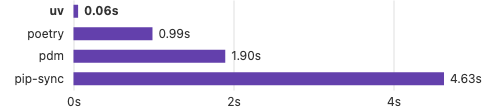
FOSS shouldn’t mean that someone works for free in replying to issues and responding to change requests. In the case of Wix Toolset, maintainer Rob Menshing worked hard with lawyers to ensure that this Open Source Maintainer Fee is fully compliant with FOSS principles and expectations. As Rob put it: “OSS does not mean that everything is available for no cost.” The more open source projects on GitHub are sustainable, the better it will be for the tech ecosystem. An open source project that is sustainable long-term – with maintainers having a reasonable workload, keeping up with comments, and releasing new versions when needed – is a lot better than one that puts up no such barriers and leads maintainers to throw in the towel and quit. Don’t forget, any company or individual who does not want to pay this fee but does want to make modifications to the code can go ahead and do it! They just need to create their fork and then can go ahead with the modification. The cost of keeping this fork up-to-date with the project then becomes theirs to pay and it could be more expensive than the $10-60/month fee asked for by the project. When introducing the fee, the Wix Toolset project had a long discussion; read the thread for more details of the thinking behind this move. Enterprise-only features: how uv’s creator plans to make moneyIn the Python world, the uv package manager is surging in popularity: it is ultra-fast and 10-100x speedier than the formerly popular package manager, pip. Part of this speed is thanks to uv being written from scratch, in Rust, for performance. It does lots of clever things like parallel downloading and installing of packages, and maintaining an optimized module cache. uv is so useful that an AI startup told me that moving over to this package manager improved productivity more than any AI tool they trialed. From Software engineering with LLMs in 2025, reality check:
uv is built by a startup called Astral that has raised $4M in seed funding in 2023. With VC funding, Astral has to generate revenue, but how to do this with a free open source package manager? We now have an answer: Astral created a private package registry called pyx, a paid-enterprise focused package registry. It’s like uv, but with additional features for security and GPU support. Astral has signed up companies like Ramp and Intercom as customers already. This approach of charging for enterprise features is clever and great news for the open source community: if Astral can get traction for pyx, they could have a business offering standout tools for free to individual developers, and also more advanced paid versions with enterprise features for companies. We have covered the pressure on commercial open source companies to make money, so fingers crossed that Astral succeeds! 2. Industry PulseMicrosoft’s US compensation bands leaked...Subscribe to The Pragmatic Engineer to unlock the rest.Become a paying subscriber of The Pragmatic Engineer to get access to this post and other subscriber-only content. A subscription gets you:
|




Comments
Post a Comment