AI Tooling for Software Engineers in 2026
👋 Hi, this is Gergely with a subscriber-only issue of the Pragmatic Engineer Newsletter. In every issue, I cover challenges at Big Tech and startups through the lens of engineering managers and senior engineers. If you’ve been forwarded this email, you can subscribe here. AI Tooling for Software Engineers in 2026Claude Code dominates tool usage, leaders are more positive about AI than engineers, staff+ engineers are the biggest users of AI agents, and more. Exclusive data and analysis from 900+ respondents
Which AI tools are software engineers using, and what do they really think of them? We asked The Pragmatic Engineer subscribers, and nearly a thousand of you have shared your experiences of using AI tools for work. This article provides a high-level overview of those findings from our latest AI tooling survey. Thank you to everyone who participated! There are plenty of interesting details, most notably, validation of just how much Anthropic and Claude Code have risen to dominate tooling usage. Claude Code is today nearly as widespread as GitHub Copilot was in our survey three years ago (in the spring of 2023) – which shows how fast the AI market moves. In today’s issue, we cover:
Full subscribers also have access to a longer, 35-page report with additional details - linked at the end of this article. The bottom of this article could be cut off in some email clients. Read the full article uninterrupted, online. 1. Interesting findingsHere are my ten personal, most-interesting findings from this survey:
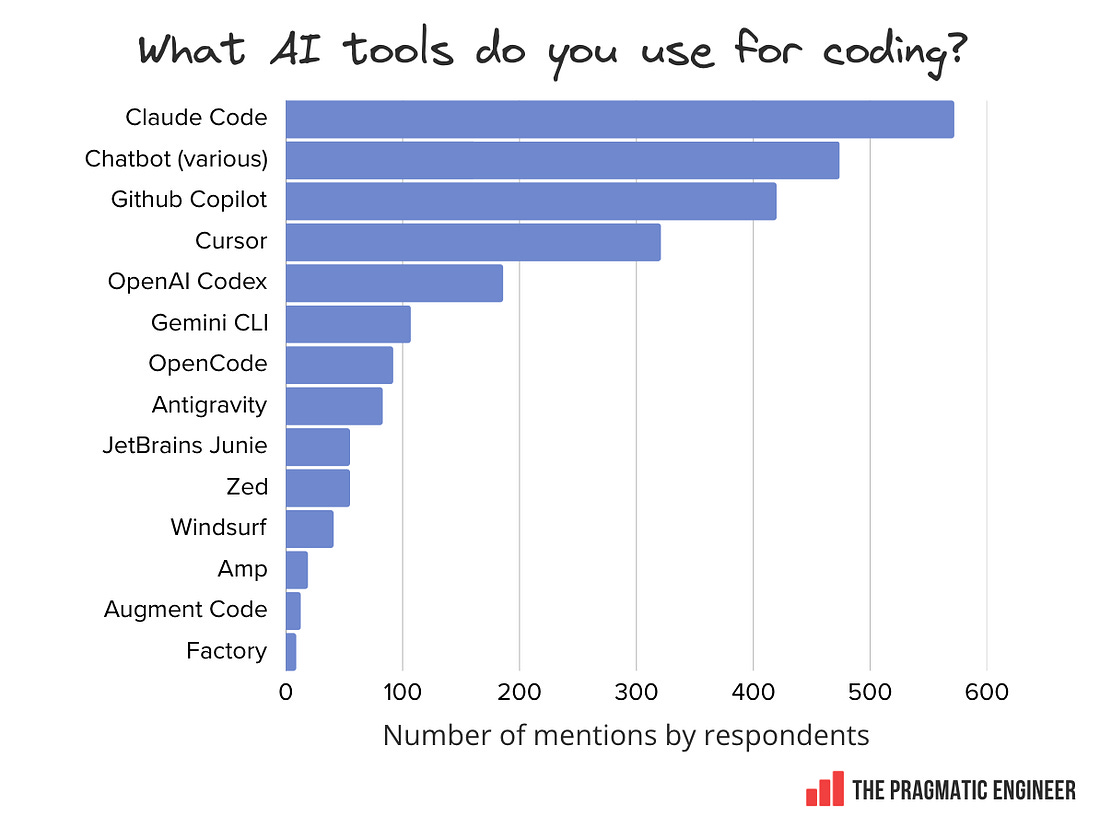
Let’s jump into some of the data: 2. Most-used AI toolsJust eight months after its release, Claude Code is already the most-used tool, overtaking both GitHub Copilot and Cursor:
Tools mentioned, in order of popularity:
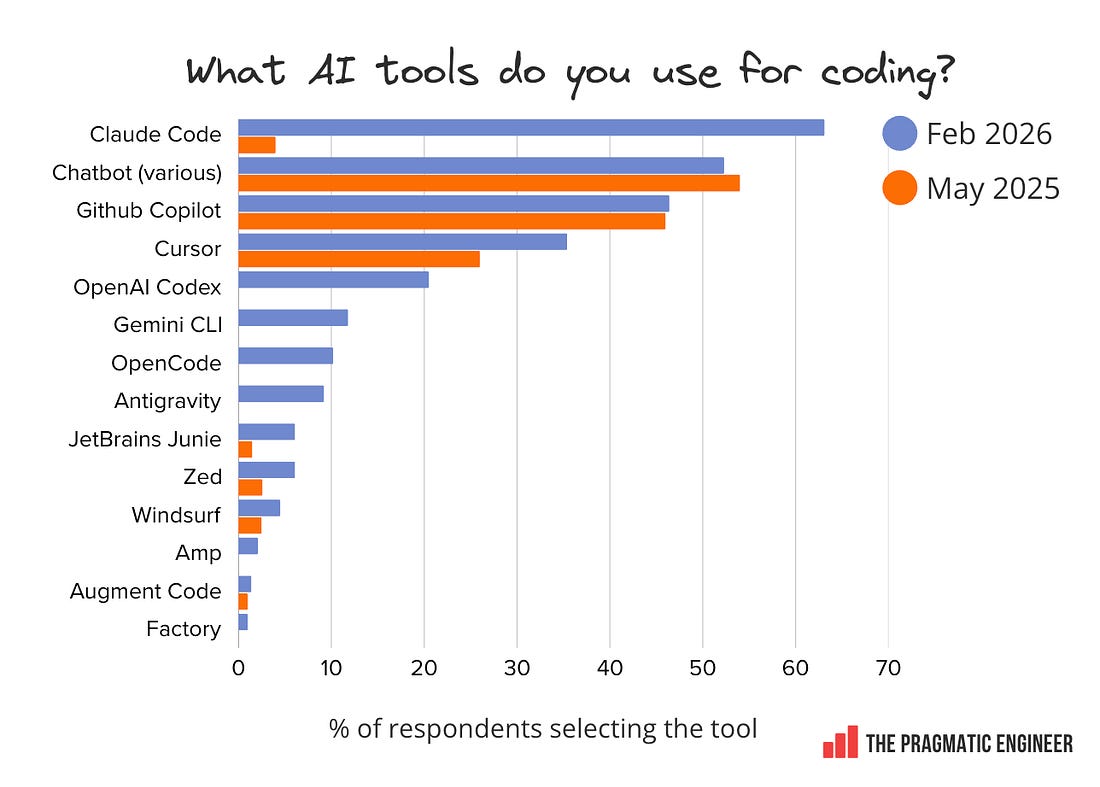
It’s interesting to compare how people answered the same question just nine months ago, last May:
Notable trends:
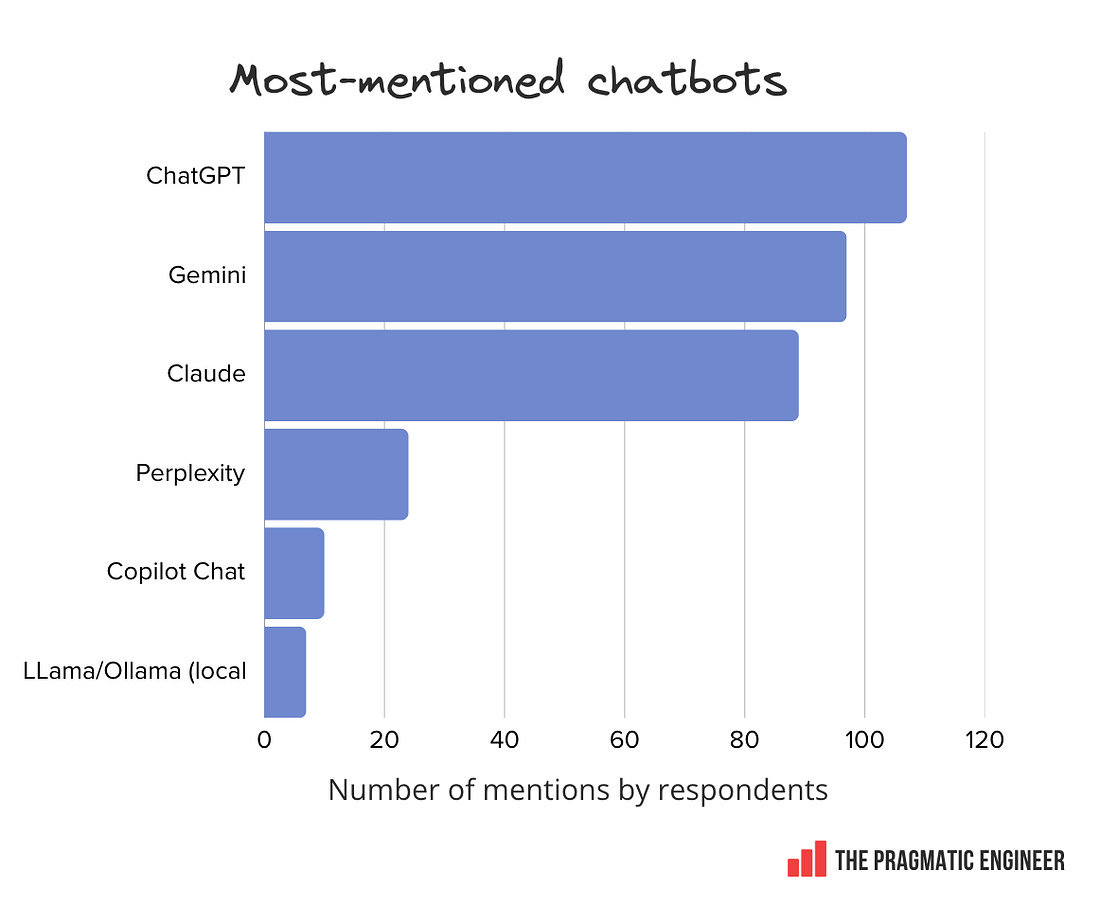
Chatbot usage: ChatGPT leads – just aboutHere’s how mentions of chatbot usage line up in our survey:
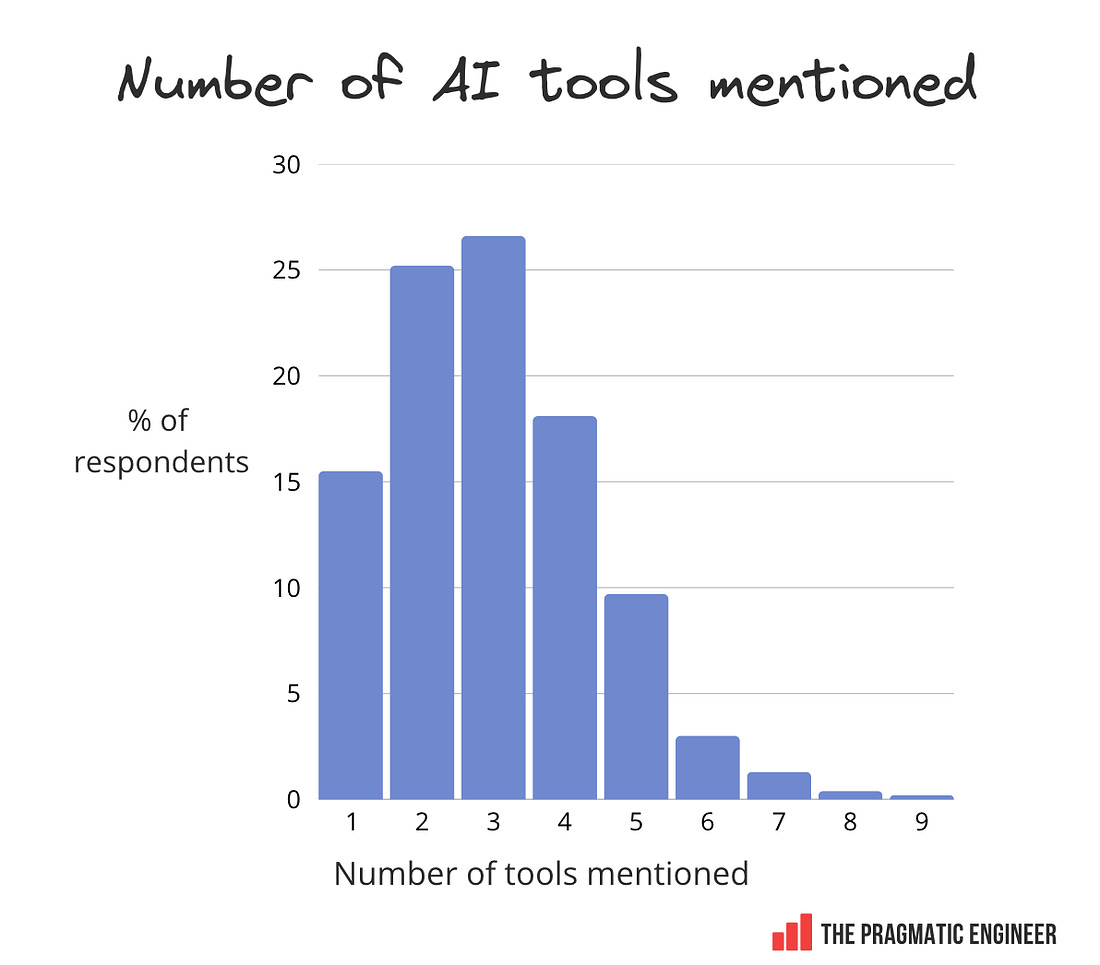
Tool usage: multi-toolMost tech professionals use between two and four AI tools. An interesting detail is how many different ones are mentioned by respondents:
Noteworthy details:
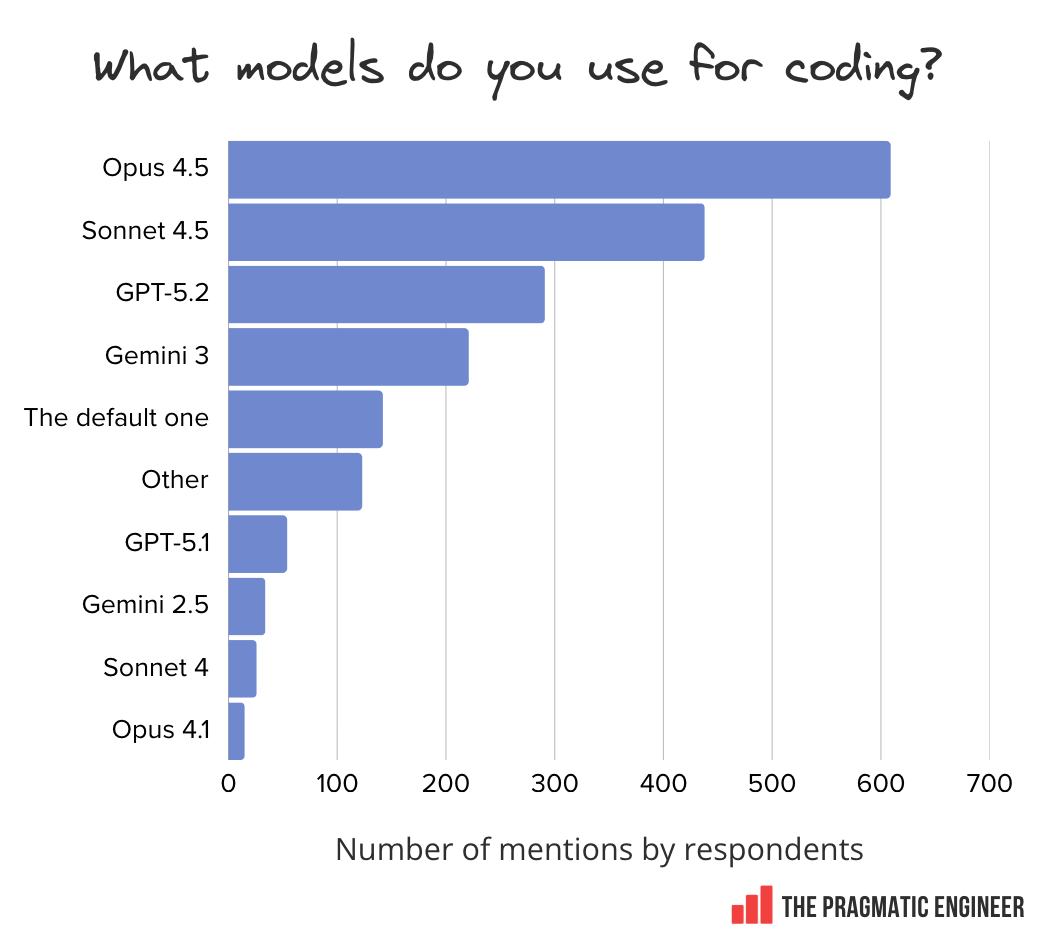
3. Popular modelsAnthropic’s Opus and Sonnet dominate the ranking of models used for coding.
This is not even a contest: Opus 4.5 and Sonnet 4.5 (latest models at the start of our survey) come up more often than all other models, combined. Anthropic has become the go-to model developer for coding-related work – for now, that is. When this survey launched, Opus 4.6, Sonnet 4.6, and GPT-5.3 were not yet out. Around 1 in 8 respondents say they just use whatever model is the default at their company. This is interesting to note: these are likely folks who might not bother changing default settings, and just go with whatever’s available. If the default model is powerful enough, that’s fine, but if the company’s default is a cheaper, less capable model, then these people could face a more frustrating experience than those who get to choose what they use. In the “other” category of models, some other mentions include:
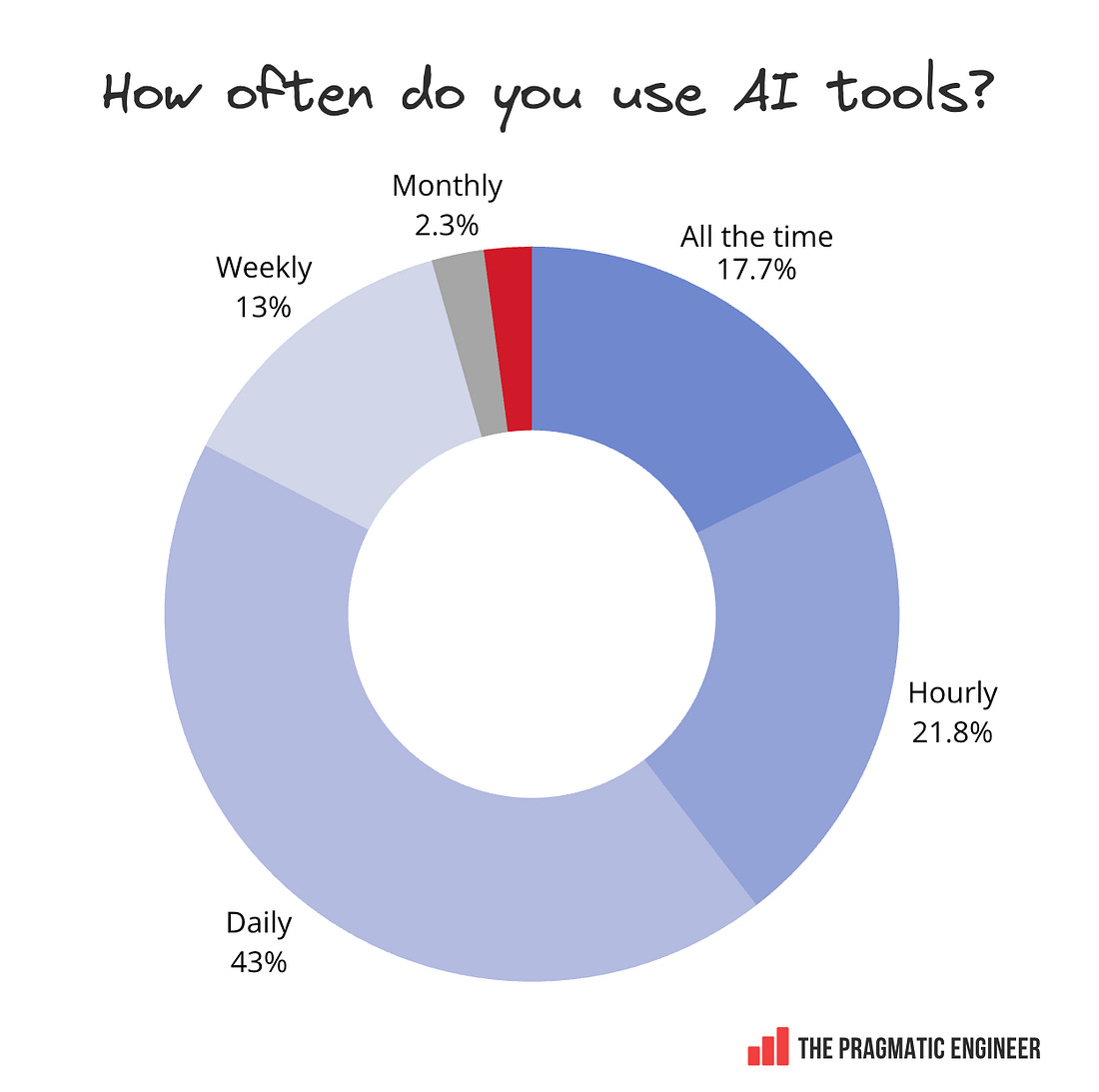
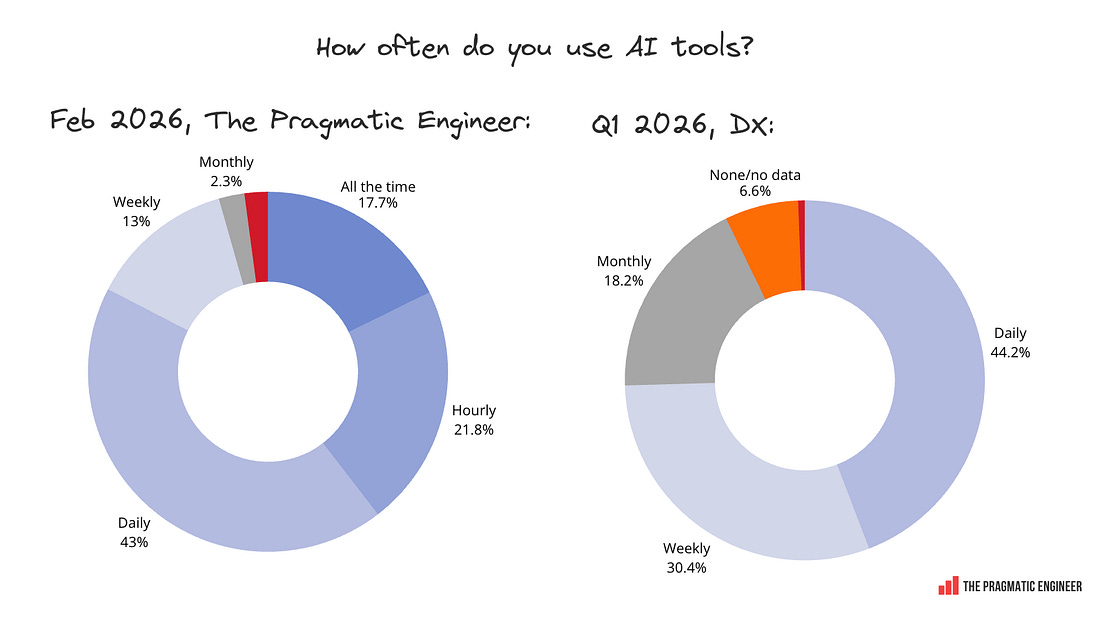
4. AI trends: Mainstream adoption achievedHow often do people use AI tools? Very often, as it turns out; 95% of respondents are using them weekly, at a minimum:
It’s worth reflecting on this data in relation to insights presented by Laura Tacho at the recent Pragmatic Summit in San Francisco:
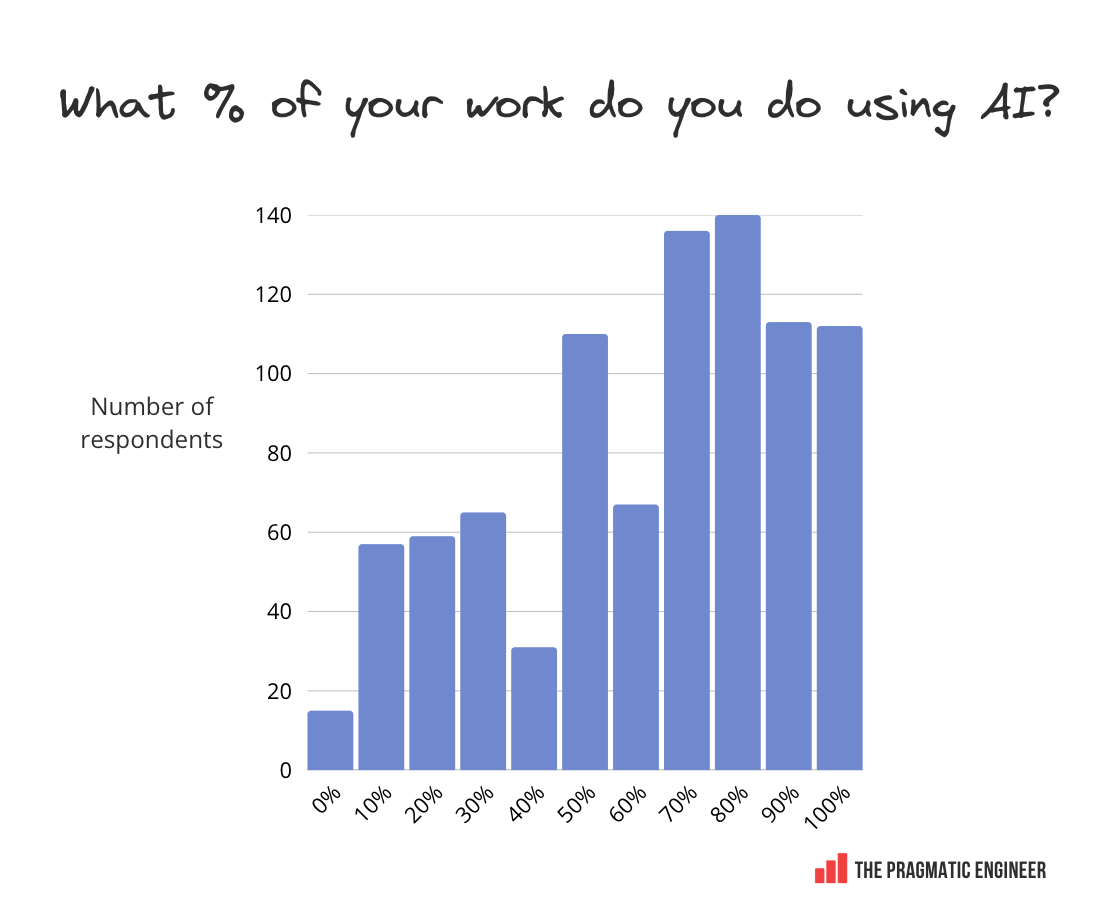
It seems that AI is now mainstream in software engineering. Anecdotally, this has been my sense since the beginning of the year: everyone whom I talk with is using AI tooling on a roughly daily basis. Now, there’s data to prove it. How much software engineering work gets done with AI?This year, we asked readers to estimate the percentage of their software engineering work that’s done using AI. The results:
The data show that AI is embedded in the workflows of participants in our survey:
5. AI agent usage risingEighteen months ago, AI usage was mostly for code generation and tab completion. There were one or two respondents who experimented with early AI agents in March 2024, as something equivalent to a junior software engineer. This year, 55% say they regularly use AI agents. This is 507 people, a massive jump! The most common use cases for agents:
Below is a typical-enough comment from one software engineer who uses agents at a smaller company:
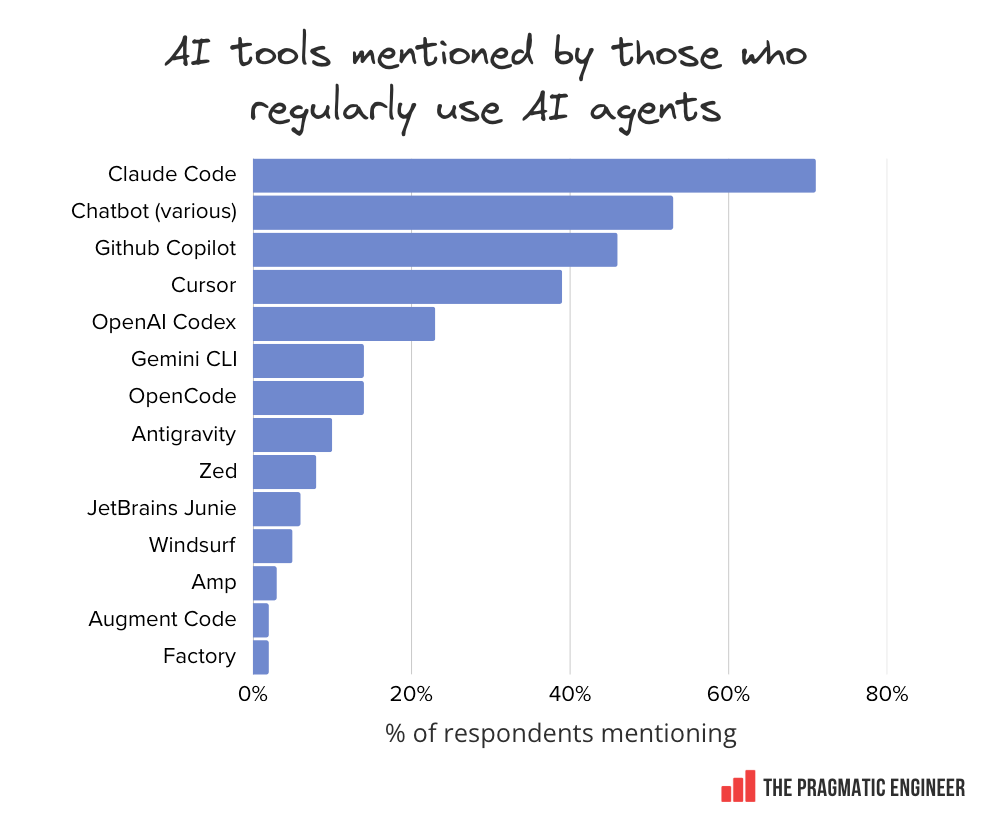
A common arrangement in the survey is the split-screen setup: a terminal with Claude Code open to drive work, and an IDE also open to review changes made by the agent. The tools mentioned by those who regularly use AI agents split almost identically to the broader survey results:
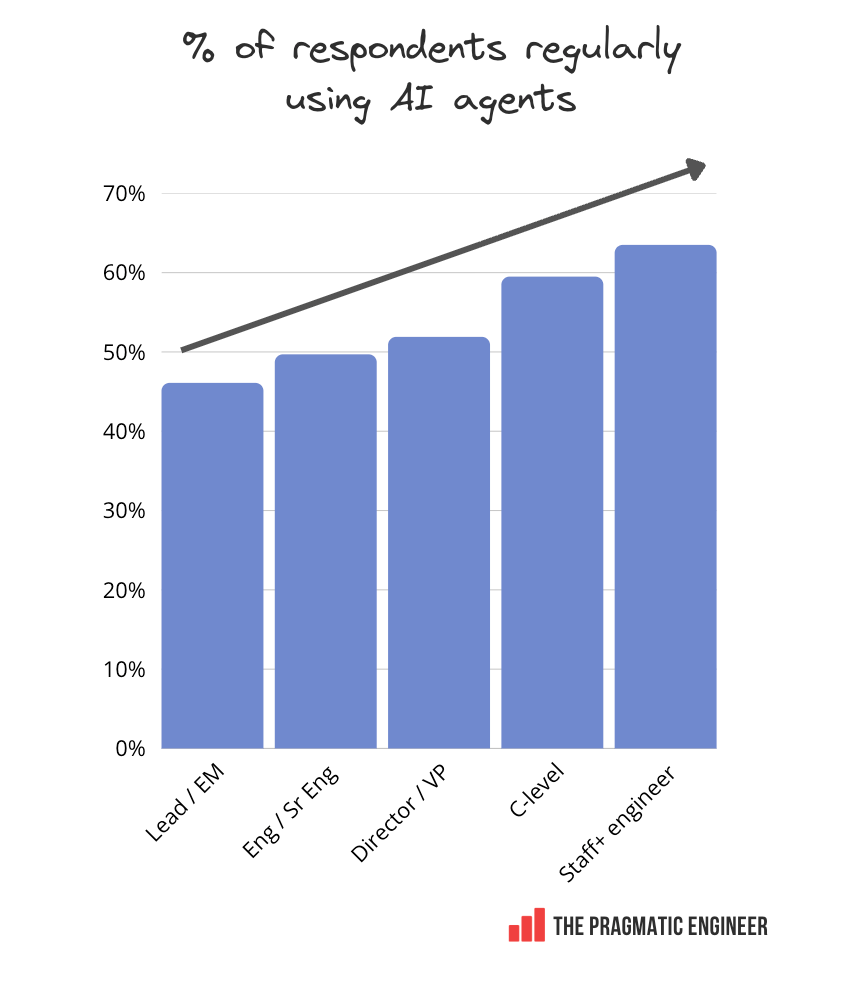
Staff+ engineers are the heaviest users of agents. Here’s the data on agent usage by experience level:
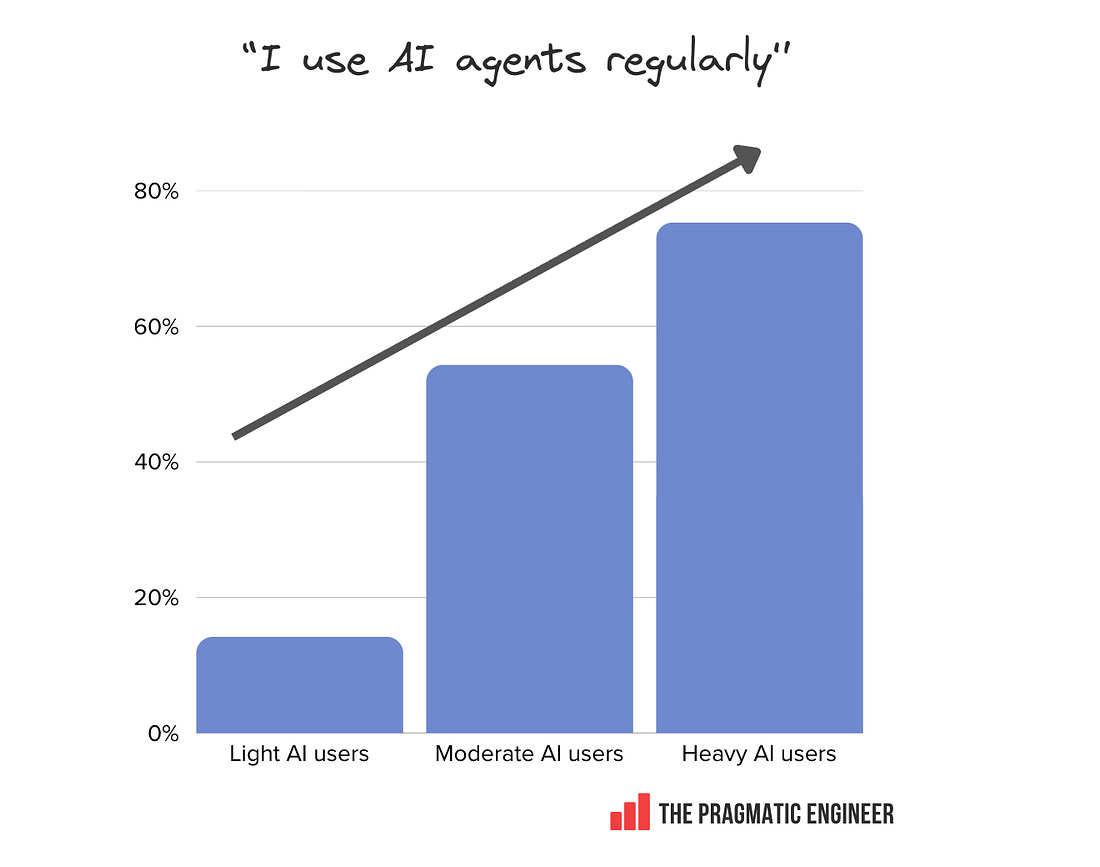
This data point is slightly amusing because it shows there’s not much difference between the lowest and highest levels: 46% of leads and engineering managers say they use AI agents regularly, while for Staff+ engineers it’s 63%. Does it suggest the most experienced engineers are also the most curious? The more someone uses AI, the more they also use AI agents. We segmented the data by the percentage of software engineering work that respondents do with AI:
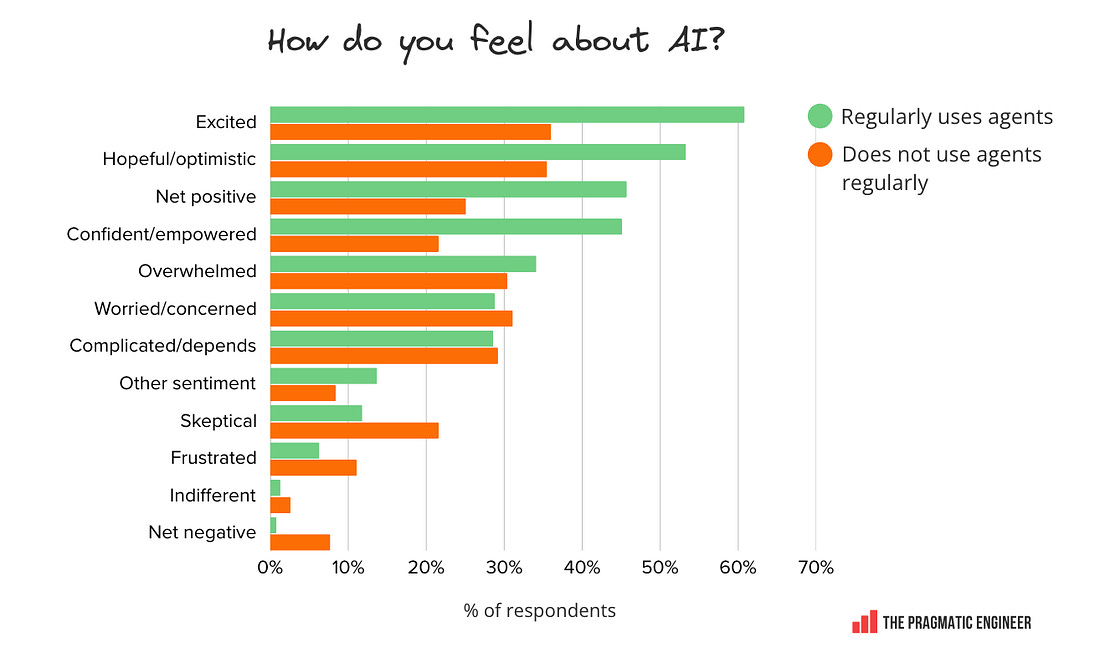
The more positive someone is about AI, the more likely they are using agents on a regular basis. In contrast, those negative about AI barely use agents:
One question is whether this finding indicates correlation or causation: that is, does starting to use AI agents more, actually cause people to feel more positive about AI? A couple of details:
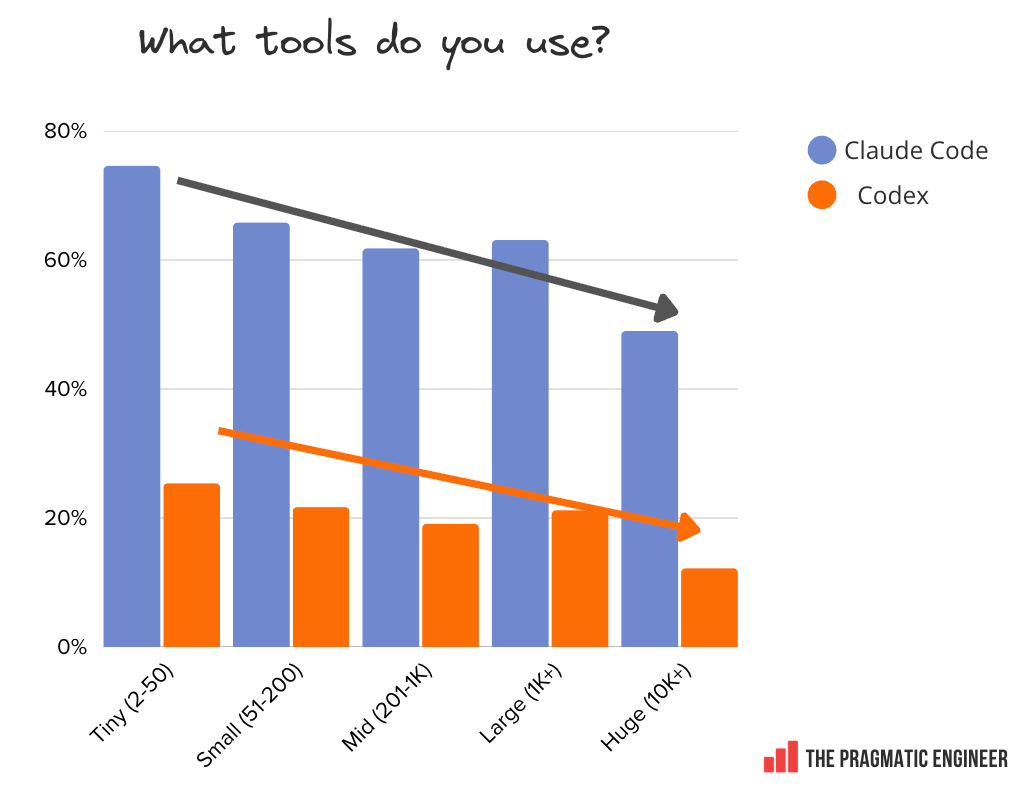
It looks like that if you don’t use AI agents on a regular basis, you may have a negative opinion about the tools, in general, which could come at the cost of not experiencing what the technology has to offer. 6. Company size and tool usageIn our results, company size and tooling choice correlate for some tools; for example, the smaller a team or company is, the more likely it is to use Claude Code or Codex:
Claude Code is used by a whopping 75% of the smallest companies and teams. This is a big number, far ahead of any other tools. At the smallest places, the most-used tools are, in order:
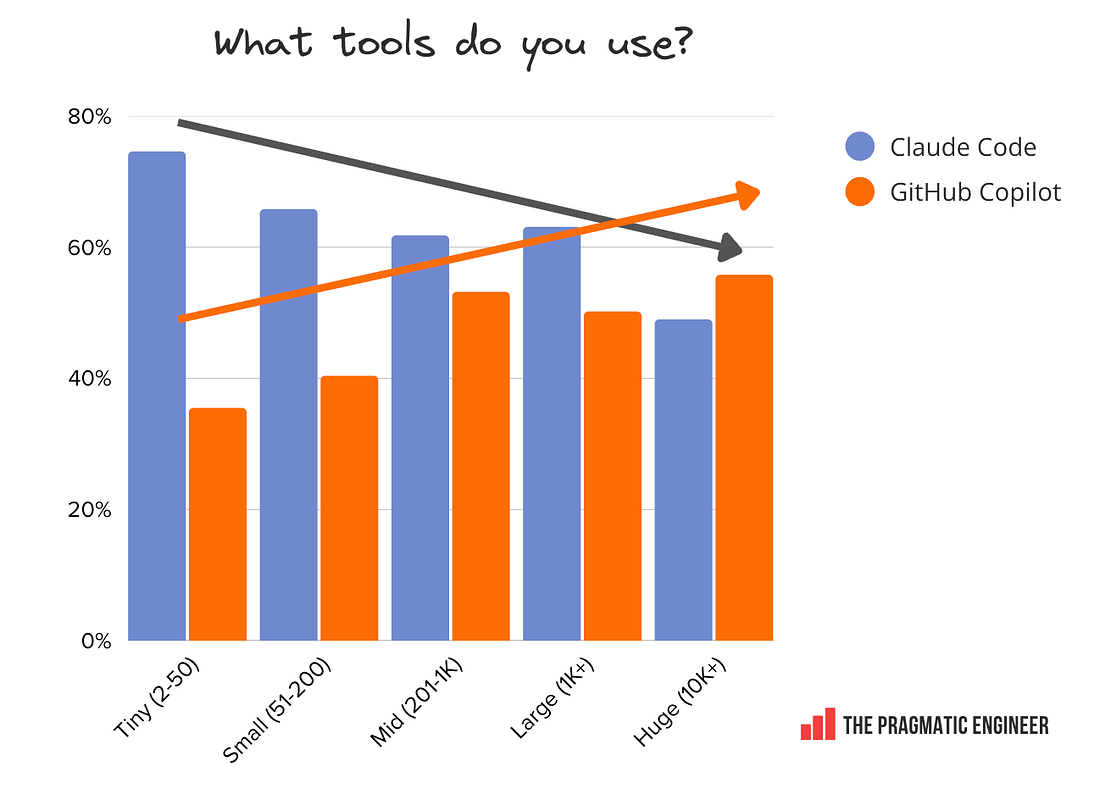
GitHub Copilot overtakes Claude Code at large companies. This confirms what was known: Microsoft is very good at enterprise sales, and at bundling GitHub Copilot in its suite of products:
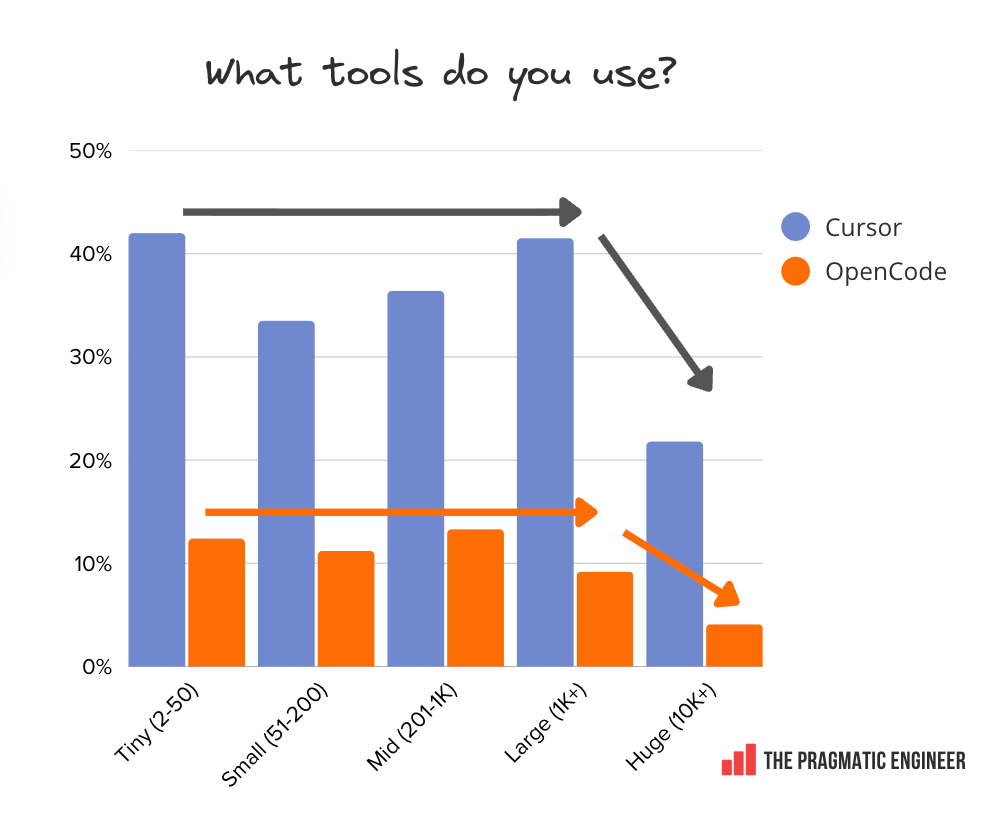
Cursor and OpenCode usage drops at massive companies with similar usage patterns. Across the board, usage is roughly the same, regardless of company size. We only see a drop at the very largest of companies with 10,000+ employees:
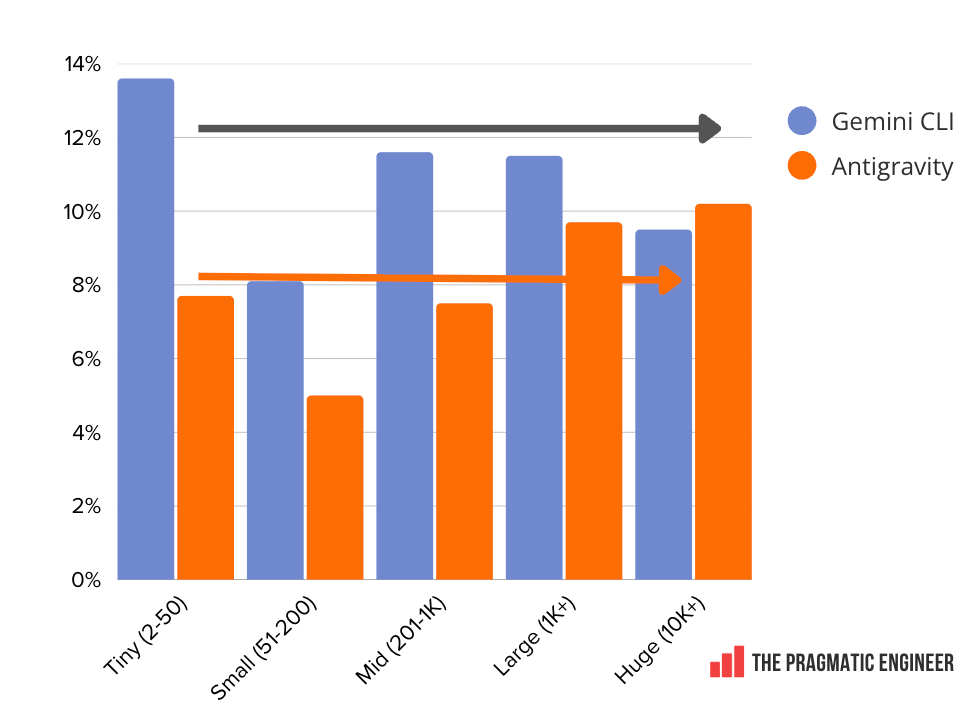
One theory for such a drop at massive companies could be that large companies often build their own internal coding agents that engineers use; e.g., at fintech, Block, the agent is called Goose, Meta has its own agent, as does Google with Jetski (its version of Antigravity) and Cider. Google’s tools are evenly used across the spectrum of company size. Google’s Gemini CLI and Antigravity are the only tools in this survey whose usage is notably stable, regardless of company size. Both tools hover at around 10% from the smallest to largest workplaces:
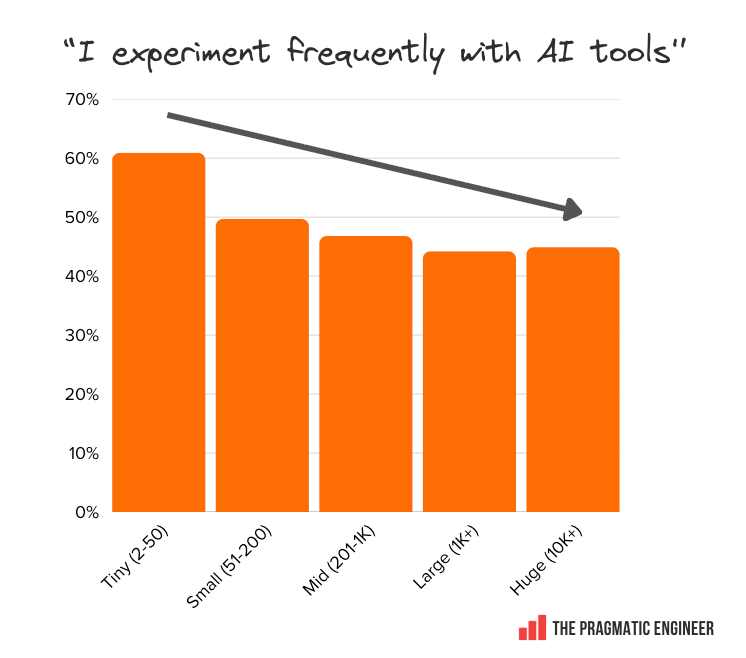
The feeling among survey respondents that they can experiment at work, correlates with Claude Code being available. We asked if readers experiment frequently with tools. Below are the “yes” responses by company size:
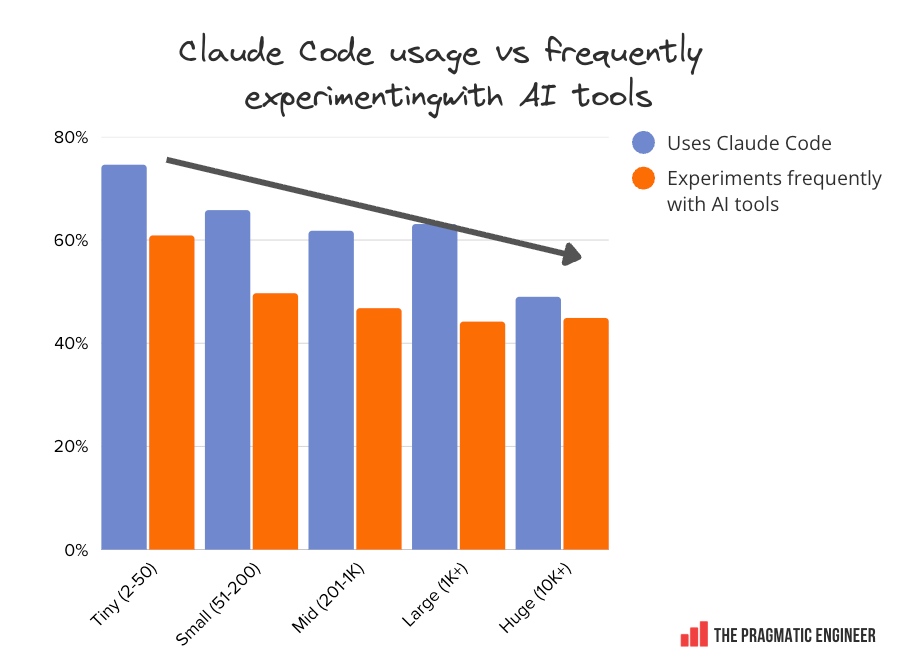
When these responses are mapped to the percentage of people using Claude Code, there’s a very similar distribution. My theory is that Claude Code is new enough at 9 months old to have not yet been approved at companies with bureaucratic processes for approving new tools, and this is partly why some respondents feel their chance to experiment with the range of tooling is being thwarted.
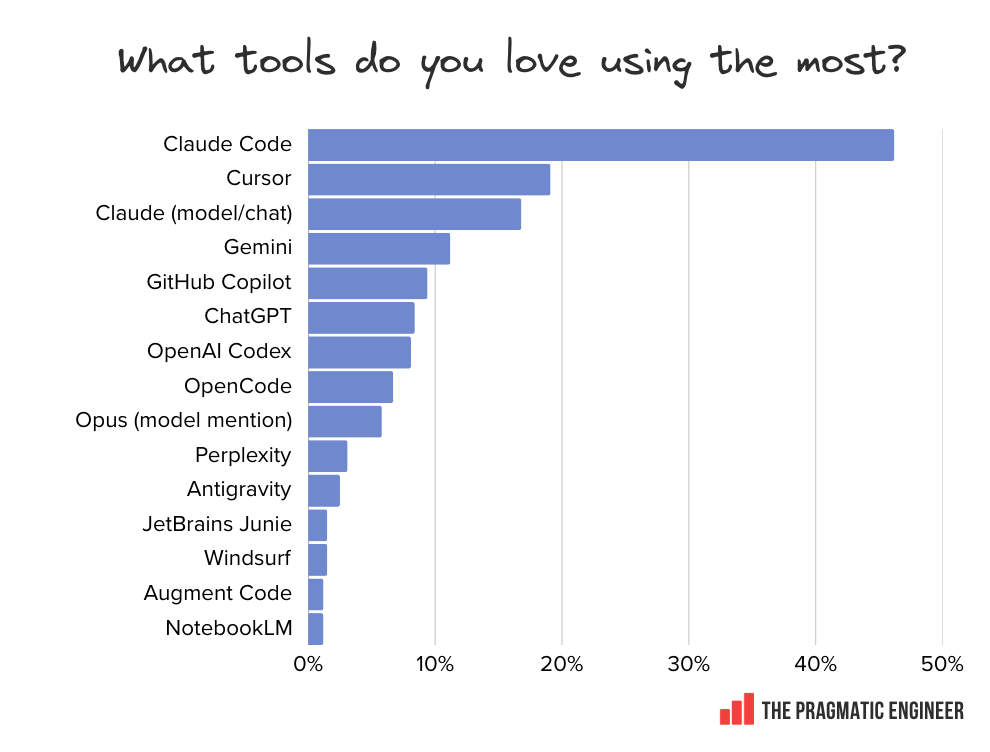
Engineers at places with lots of red tape for tooling are less empowered to experiment with new AI tools; not just Claude Code, but any new, interesting tool. 7. Tools engineers loveWe asked respondents: “Which AI tools do you love using the most, and why?” Below are the tools which respondents enjoy most, in descending order of number of mentions:
Claude and Cursor stand out in terms of how much they are loved. A whopping 57% of respondents mention either Claude Code (46%) or Claude models (11%) as the tools they are attached to. Cursor was at a respectable 19% – double GitHub on 9%. Other notable tools with two or more mentions:
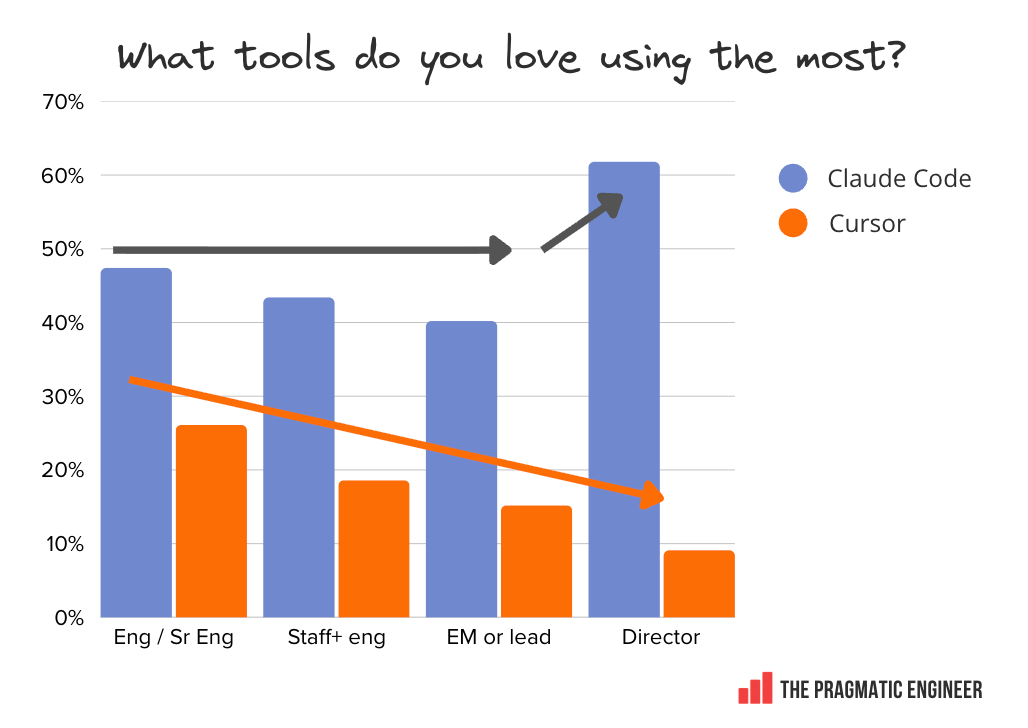
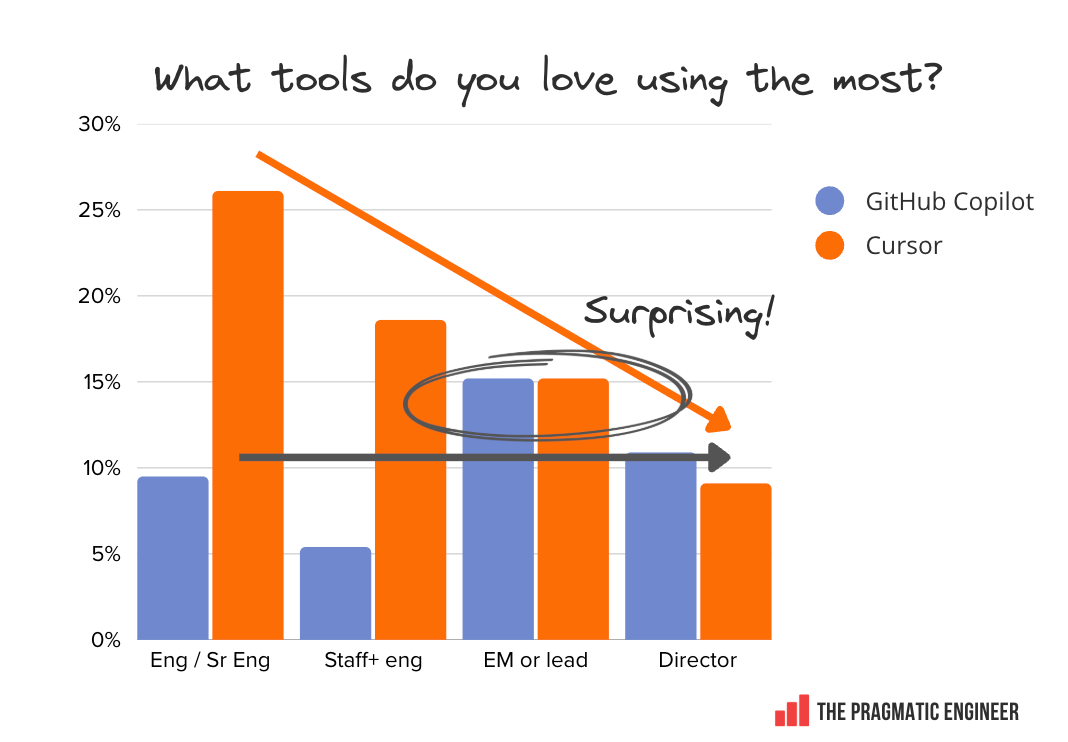
Claude Code is especially loved by Director-and-above folks. Segmenting the “most loved” responses by level (engineers up to the senior levels of staff+ engineers, leads/eng managers, and Director+ folks):
Both Claude Code and Cursor become less loved – or used! – as seniority goes up, but it’s notable that folks in senior engineering leadership positions are obsessed with Claude Code, but not Cursor. GitHub Copilot is equally loved by engineering managers as Cursor is — and this is surprising:
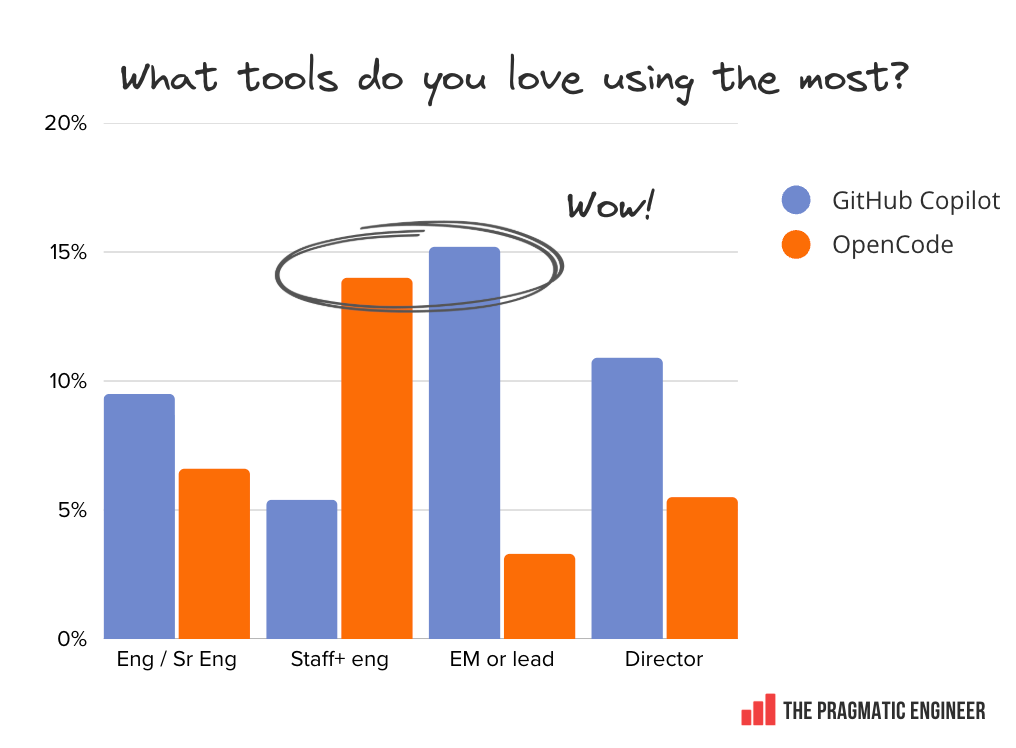
Both OpenCode and GitHub Copilot are surprisingly loved by Staff+ engineers. Another unexpected detail is that, despite OpenCode being used about a quarter as much as GitHub Copilot, it rivals the “loved” mentions. For Staff+ engineers, it matches GitHub on those terms:
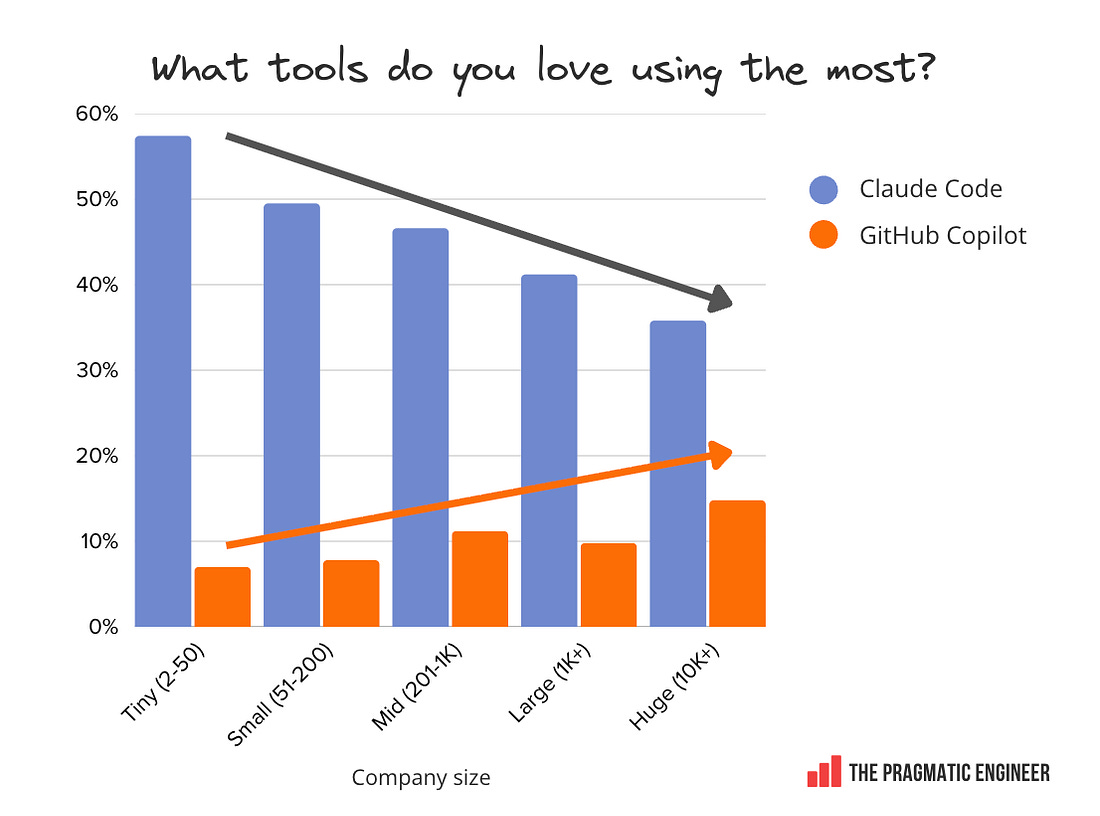
Finally, when segmenting based on company size, we see the familiar pattern of Claude Code vs GitHub Copilot. Claude Code is less frequently mentioned as a “loved” tool as company size increases.
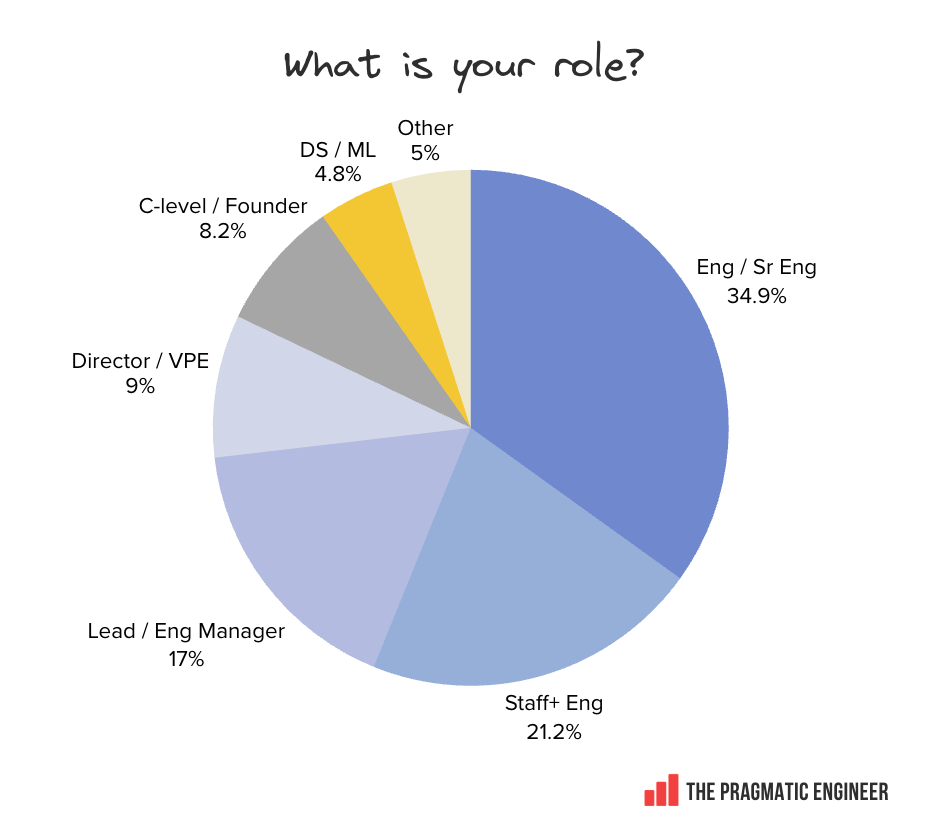
GitHub Copilot sees the opposite trajectory: it’s more loved within larger companies where it’s likely to be harder to experiment with alternatives. 8. DemographicsIn closing, below are details about who took the survey, and how the 906 responses came together. Engineers comprise 55% of respondents, and engineering leadership another 34%:
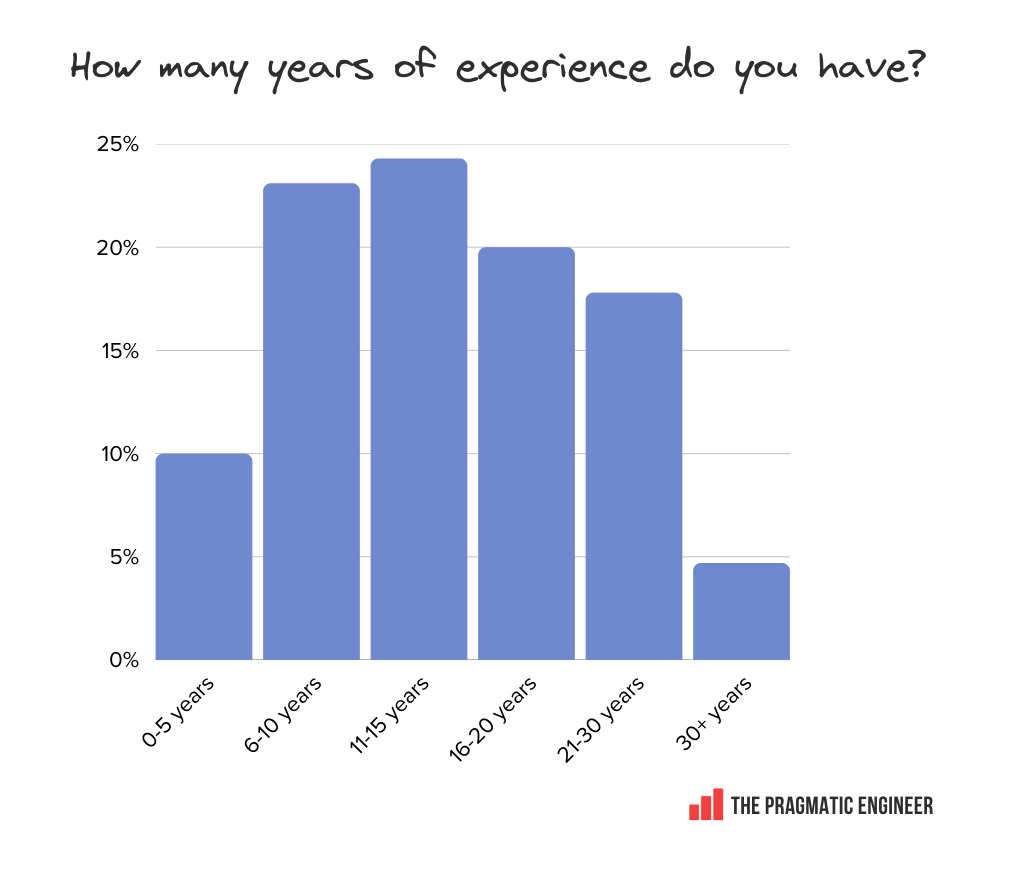
Respondents are experienced professionals. The median respondent has 11-15 years of experience:
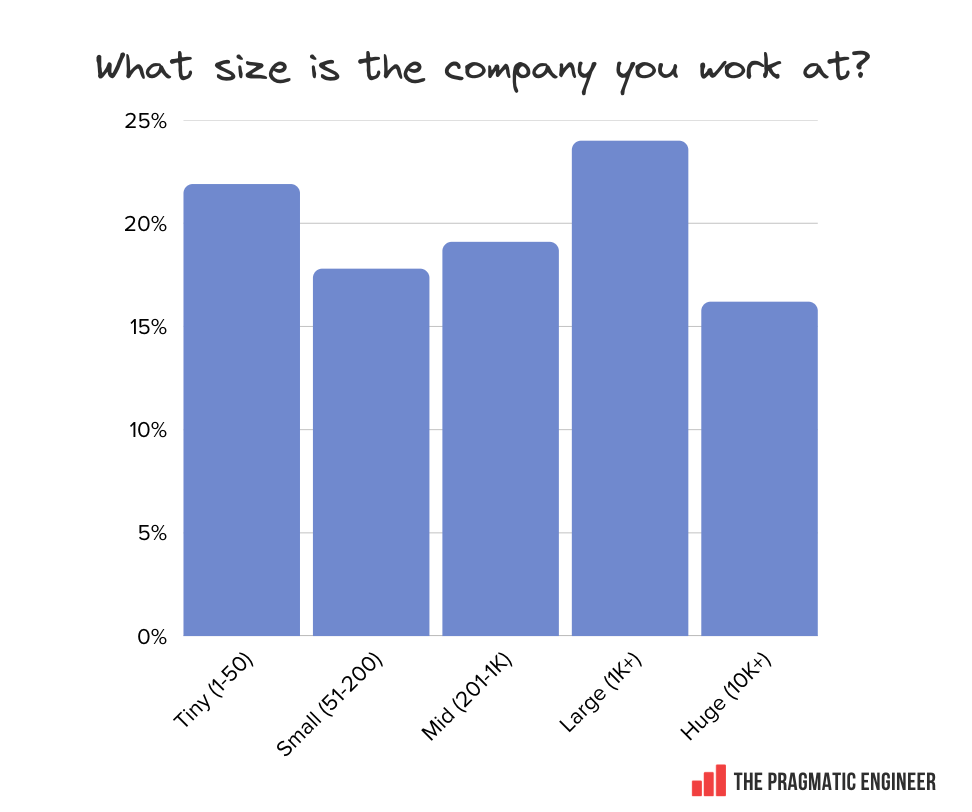
Company size is also a fairly even split across this group:
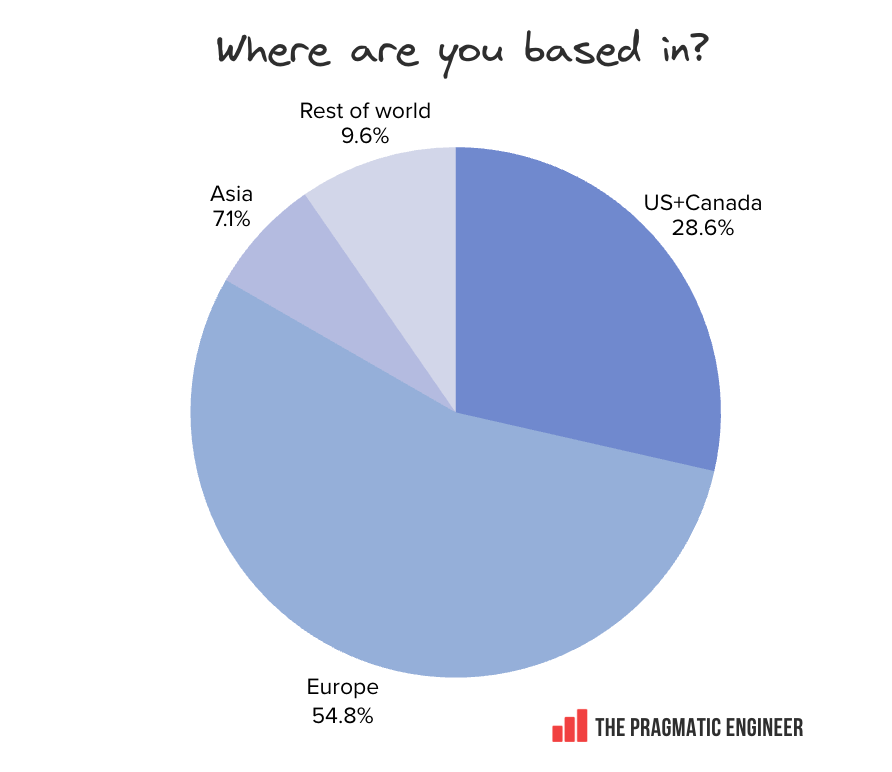
Region-wise, most respondents are in Europe or the US:
Takeaways and the full reportWe have compiled additional findings from this survey which did not fit in this article: it’s a 35-page article:... Subscribe to The Pragmatic Engineer to unlock the rest.Become a paying subscriber of The Pragmatic Engineer to get access to this post and other subscriber-only content. A subscription gets you:
|







Comments
Post a Comment