State of the software engineering job market in 2026, part 2

👋 Hi, this is Gergely with a subscriber-only issue of the Pragmatic Engineer Newsletter. In every issue, I cover challenges at Big Tech and startups through the lens of engineering managers and senior engineers. If you’ve been forwarded this email, you can subscribe here. State of the software engineering job market in 2026, part 2Deepdive into the tech jobs market with exclusive data revealing AI labs are more attractive than Big Tech, native mobile & frontend roles are declining, management’s “great flattening”, and more
What’s going on in today’s job market? We try to answer that big question in this second part of our deepdive into the tech employment market, following Part 1, published two weeks ago. First of all, a big thank you to partner teams for sharing exclusive details for this deepdive:
Today, we cover:
As a reminder, in Part 1, we covered:
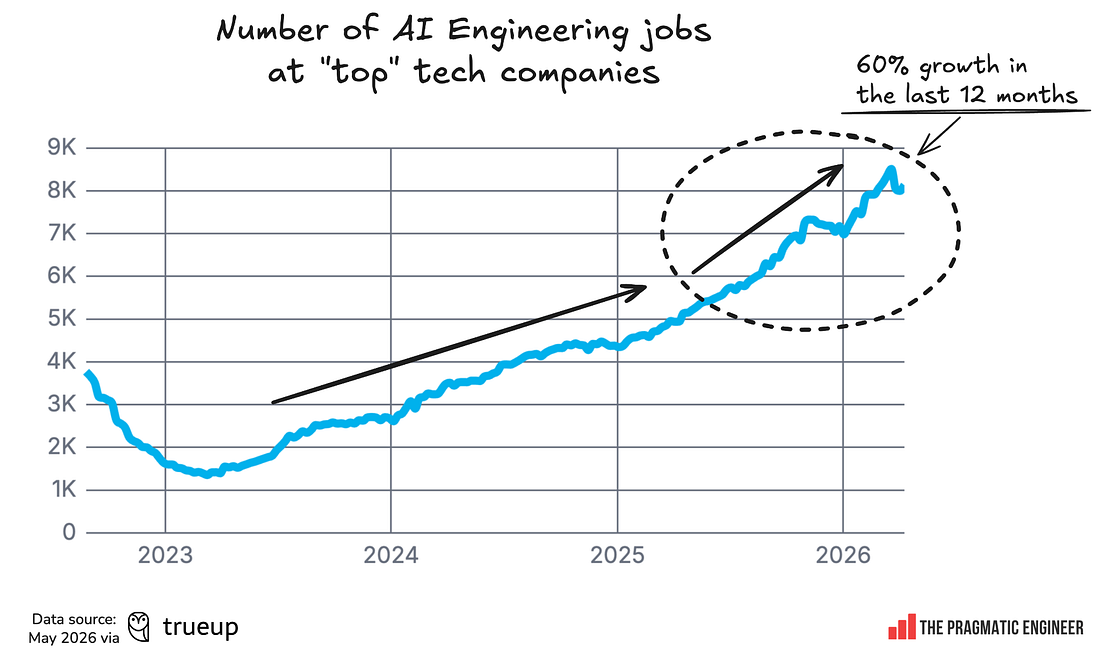
The bottom of this article could be cut off in some email clients. Read the full article uninterrupted, online. Let’s get into the latest data: 1. Top AI labs now more attractive than Big TechIn Part 1 of this mini-series, we cover the exploding demand for AI engineering:
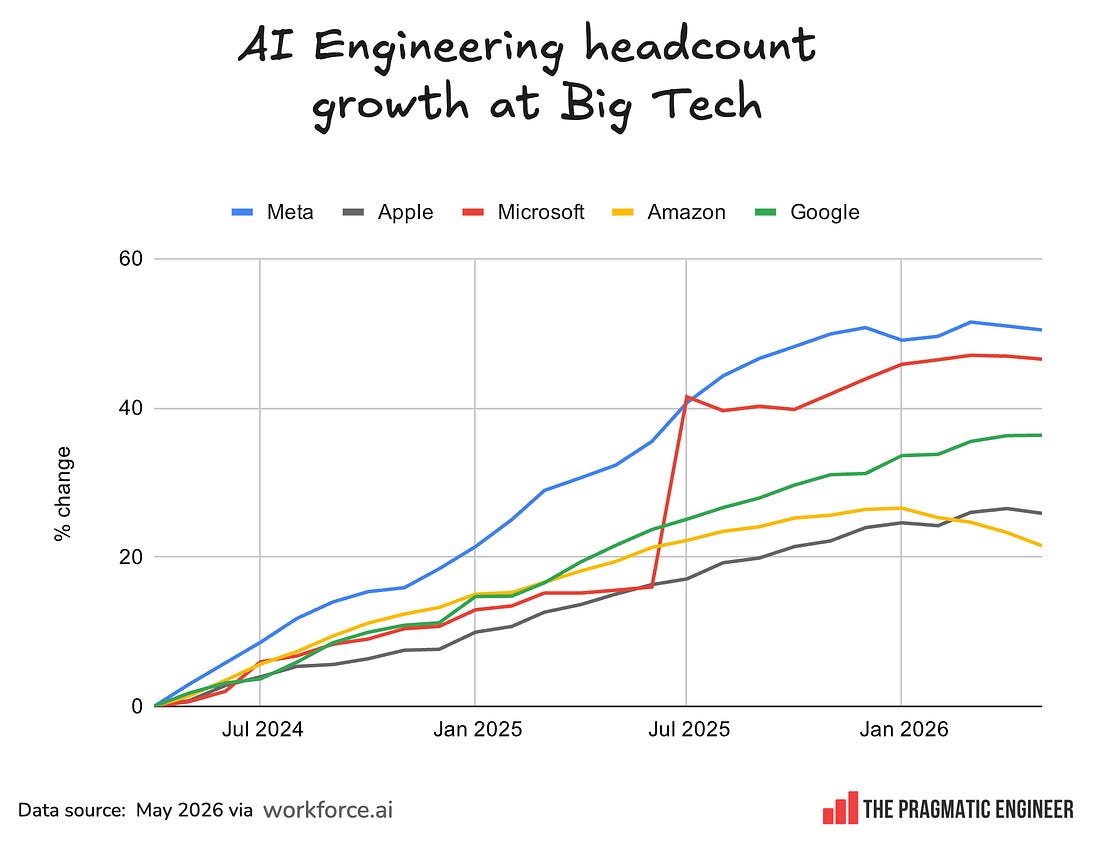
AI engineering job openings have increased 60% in the past year at top companies, while software engineering openings grew by 7% in the same places. We also found that Big Tech is significantly growing AI engineering headcount:
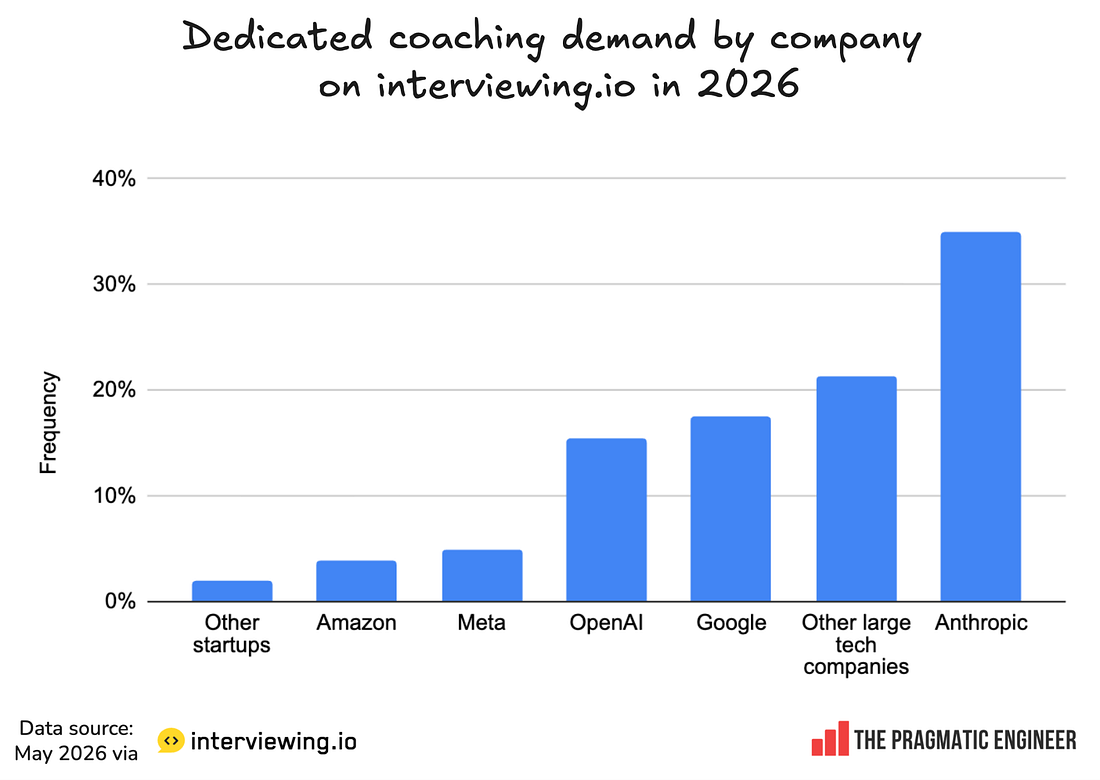
Anthropic: most in demandNew data suggests that the two biggest AI labs are attracting the most candidates to apply for their AI engineering roles, which is pretty predictable. Interviewing.io is a job interview preparation service which offers coaching for clients who are getting ready for interviews at specific companies. Based on the number of mentions by clients, Anthropic is the one most candidates are preparing for with paid coaching, and it’s not even close:
It’s also notable that OpenAI (16% of candidates) gets around the same share as Google (17%) and other large tech companies (17%). Combined, Anthropic and OpenAI account for 51% of all interviewing.io coaching requests. For context, interviewing.io only added coaching for frontier labs this year!
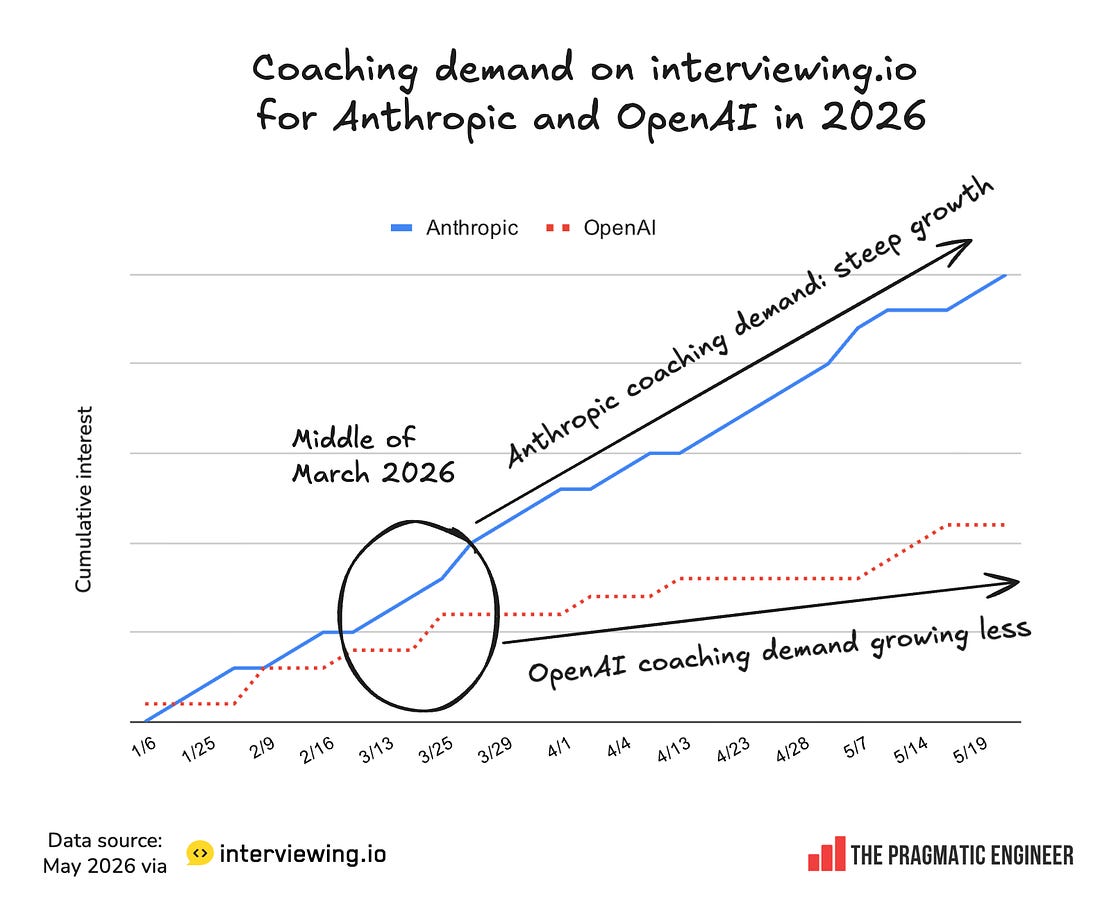
There are a few potential causes of the surge of interest in Anthropic:
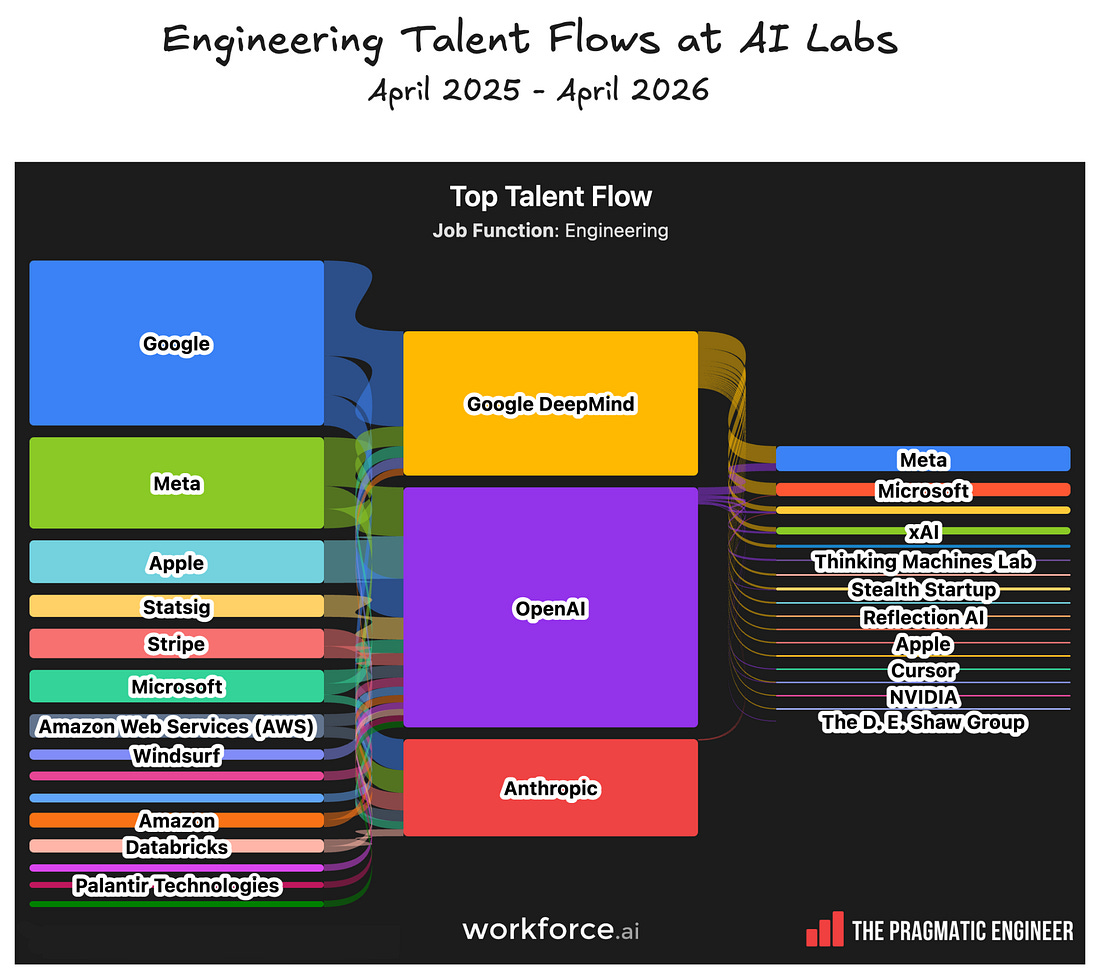
Anthropic also recruited the most in-demand AI researcher, Andrej Karpathy, in May. My sense is that between the two labs, Anthropic has more momentum for the time being, and has perhaps acquired a ‘halo effect’ with its seemingly principled stance. It’s not surprising that it’s attracting more candidates. Where are AI labs hiring from?We looked into the sources of recruits to the three most in-demand AI labs: Anthropic, OpenAI, and Google DeepMind. Here’s what we found:
Where Anthropic hires from, in order of popularity:
OpenAI:
Google DeepMind:
Anthropic has the highest retention rate of all AI labs. Data from SignalFire found the 2-year retention rate (percentage of employees who stay 2 years) is:
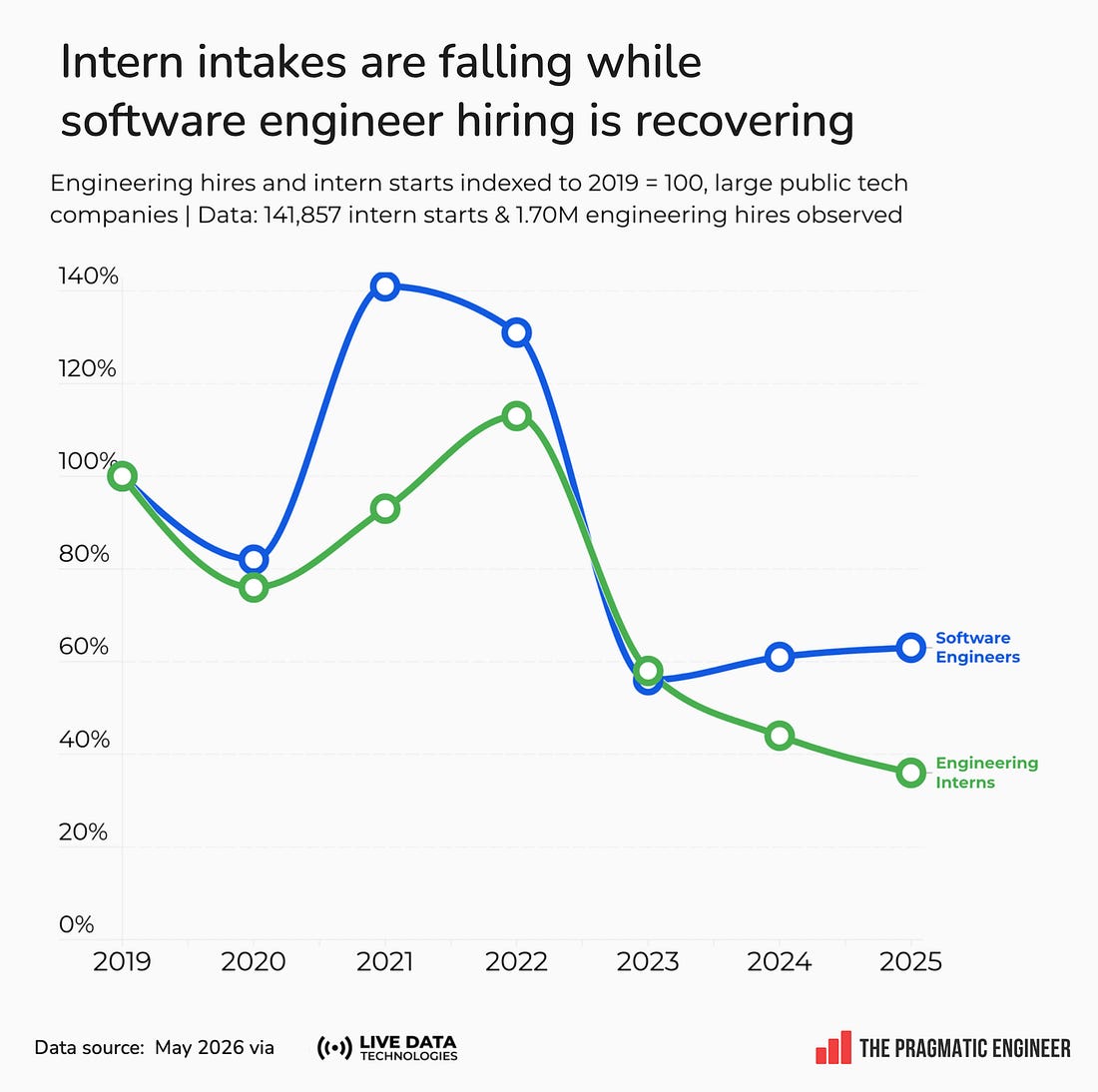
Consistent with SignalFire’s 2025 finding, OpenAI 2-year retention was 67% (FAANG-level) versus Anthropic (80%), and DeepMind (78%). 2. Harder for graduates & interns to get hiredIt’s well known that it’s getting harder to be hired as an early-career engineer, and new data underlines this. Intern intakes down since 2022Live Data Technologies looked at software engineer vs engineering intern hiring trends at 30-80 US-based tech companies, pinned to 2019 hiring numbers (100% being that year’s total number of hires). The spread is wide because Live Data Technologies selects the top few dozen companies that meet their criteria for a “large public tech company” in their database. The findings:
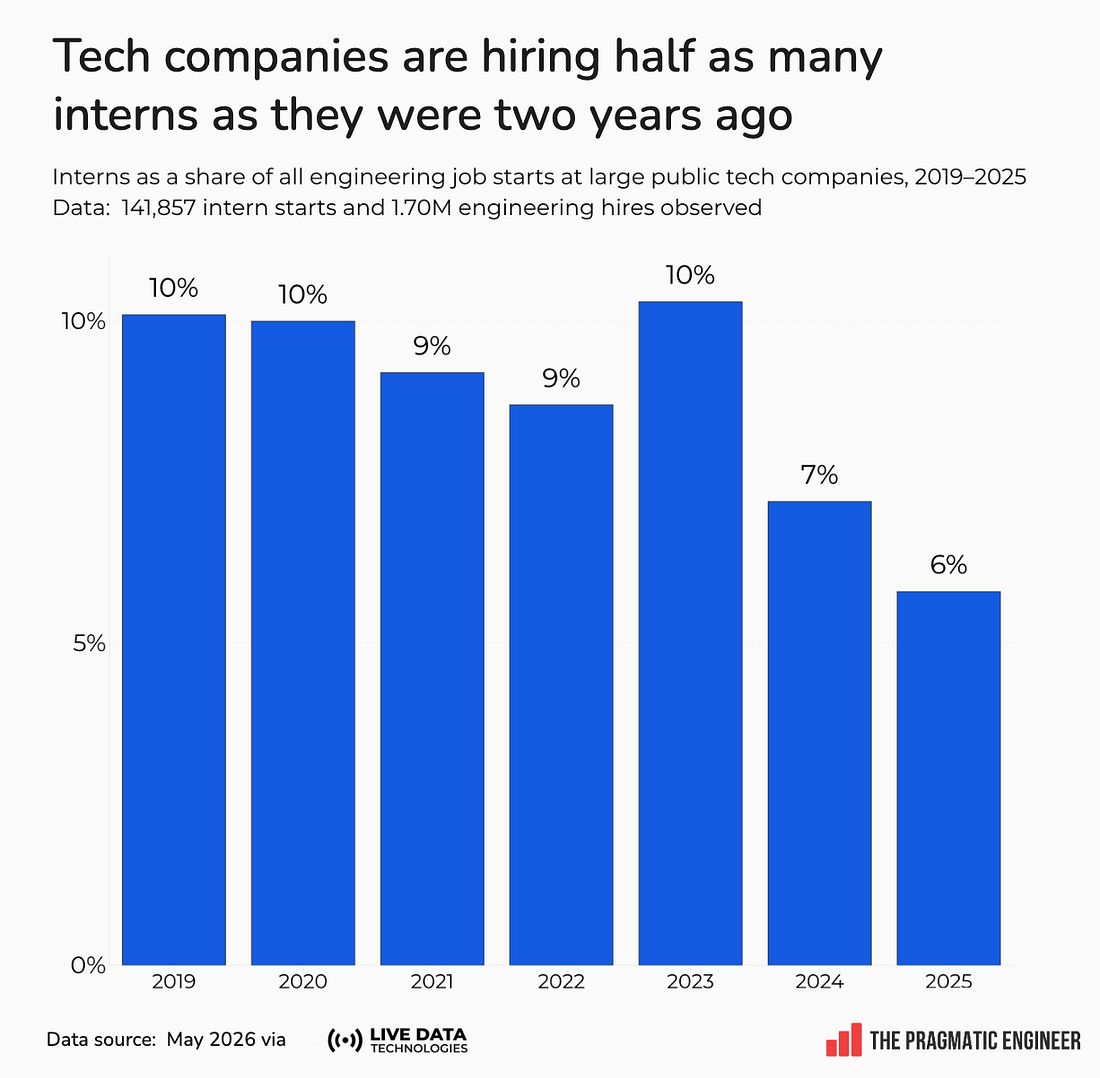
Zooming into intern hiring, here’s a visualization of it as a percentage of all appointments:
Alex Hamilton, analyst at Live Data Technologies, says:
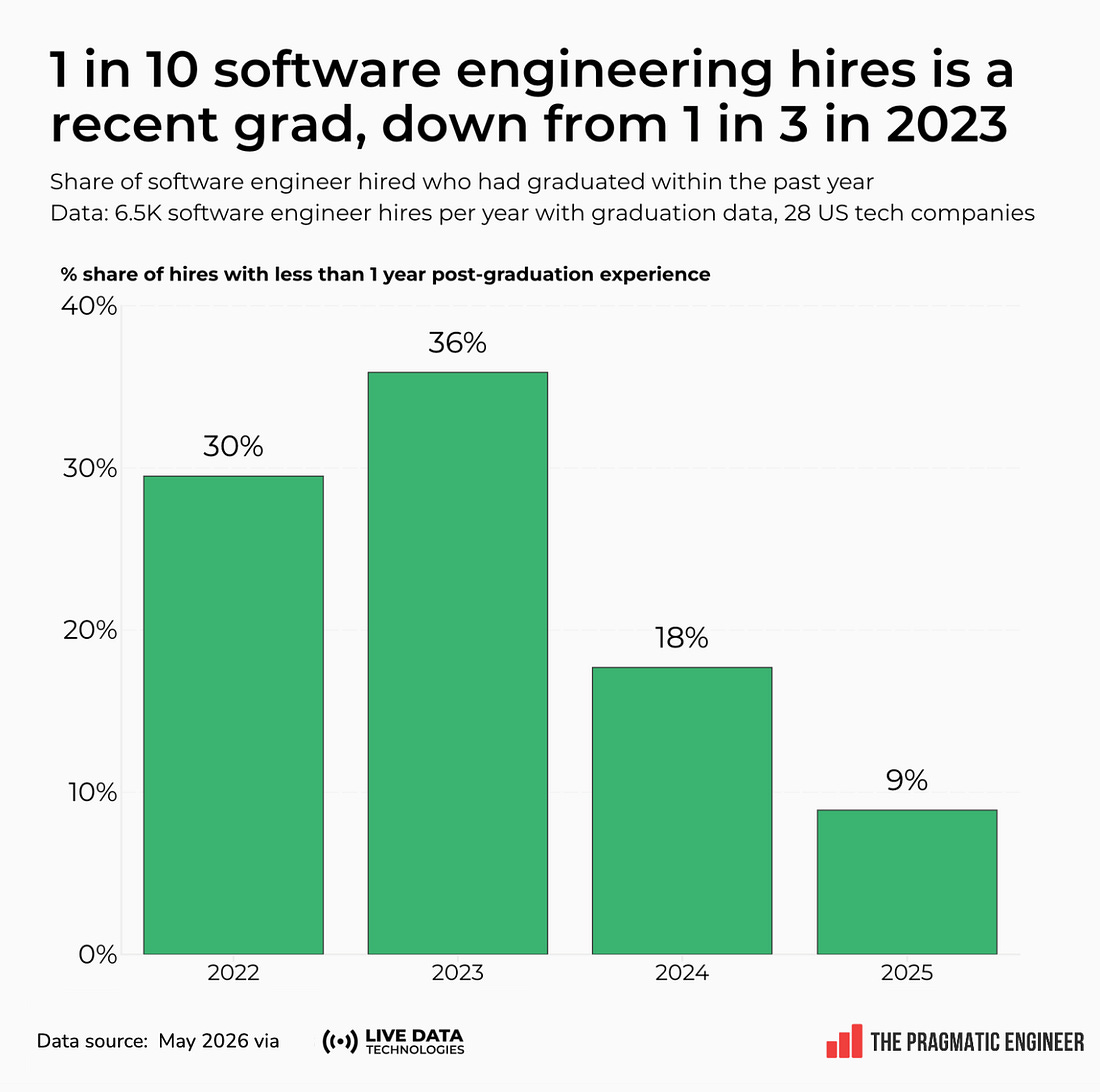
Graduate jobs trending downAnecdotally, we hear new grads continue to have a hard time finding a position. Our new recruitment data on major US tech companies confirms it:
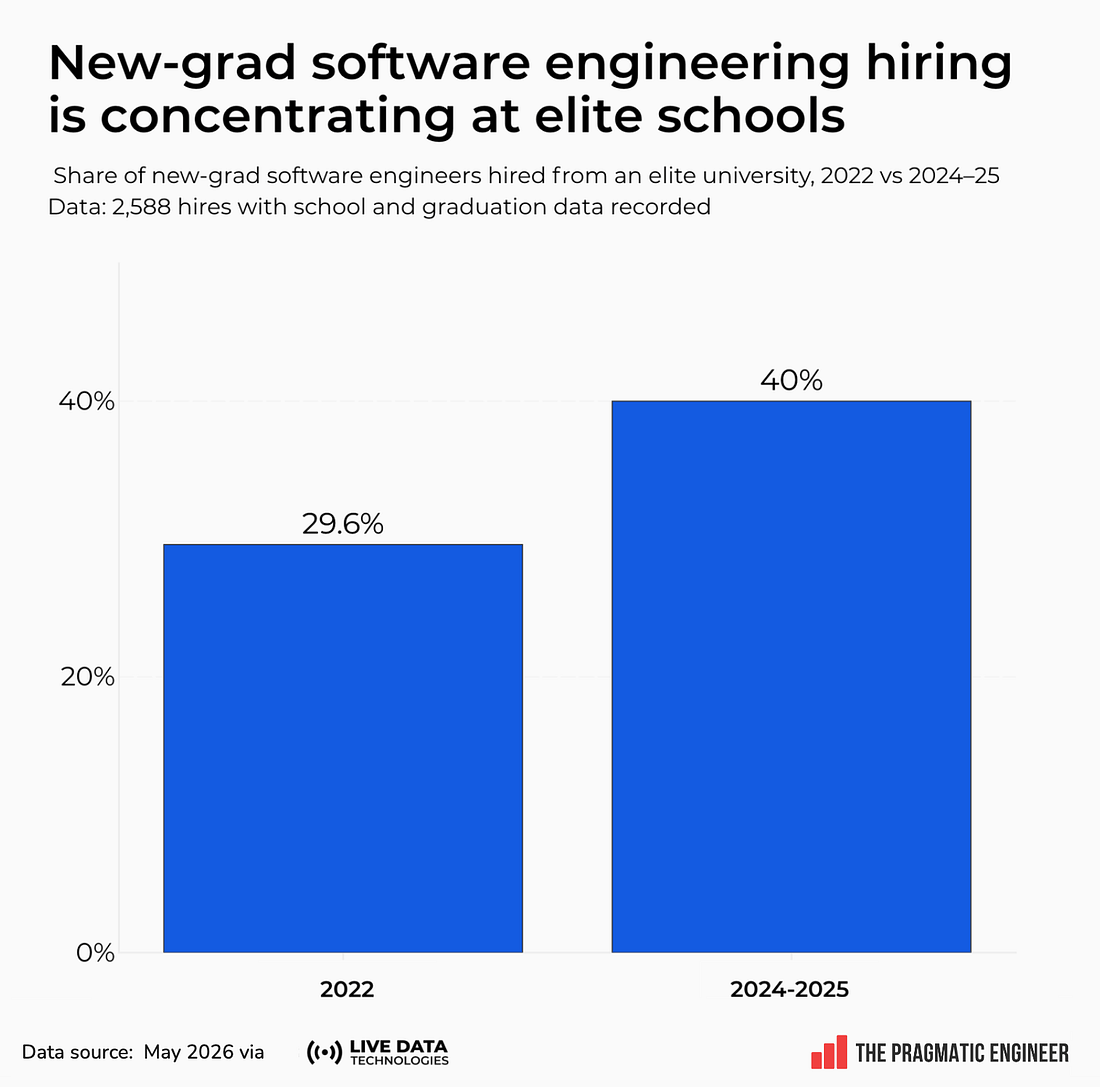
“New grads” in this data are software engineers who graduated less than a year before getting a job as a software engineer. In 2025, just one in 10 engineering hires at larger companies were recent grads, down from nearly three in 10 in 2023. Pedigree matters more for new gradsWe looked closely at the places from where new graduate software engineers are joining US-based tech companies, and found the share of successful candidates from “elite” universities is growing:
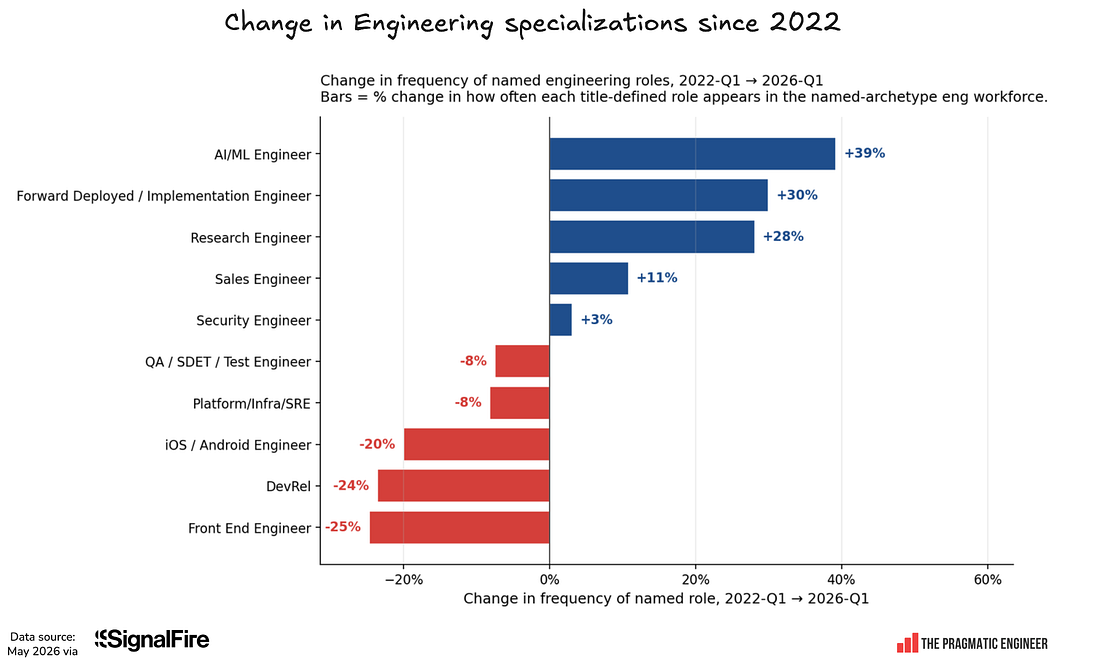
By “elite” universities, we mean one of the top 20 US colleges for computer science, such as MIT, Stanford, Carnegie Mellon, UC Berkeley, Harvard, Caltech, Georgia Tech, and Cornell. Obviously, the influence of these places’ reputations is not a new thing, it’s what makes them “elite” universities, after all. But with new grad hiring down across tech, even graduates from these universities can expect fewer opportunities than before. Even so, the pedigree that comes from graduating from a well-known university, or doing an internship at a well-known company, becomes ever more significant as the job market tightens. 3. Mobile and frontend demand drops, AI & FDE surgesHere’s interesting data showing the shifting prevalence of job titles on sites like LinkedIn over time:
Some takeaways:
4. AI engineering comp > software engineering compOne poorly-kept secret in tech is that although software engineering compensation is very good at Big Tech and top startups, it’s superior for AI engineering jobs at the same places – and even better at leading AI labs:... Subscribe to The Pragmatic Engineer to unlock the rest.Become a paying subscriber of The Pragmatic Engineer to get access to this post and other subscriber-only content. A subscription gets you:
|







Comments
Post a Comment