The Pulse: RoR creator sparks new “death of coding by hand” debate

The Pulse: RoR creator sparks new “death of coding by hand” debateIn his Rails World keynote, David Heinemeier Hansson (DHH) declared the end for writing code by hand for professional work – at 37signals at least. Is this change now unstoppable?
Before we start: if you happen to be in San Francisco on Thursday, 5 November, join me on the System Update with The Pragmatic Engineer event. This is an evening with OpenAI, Linear and DoorDash and myself, organized by Sentry. We get into what AI-augmented automations they’re running in prod, and how it’s going, in an off-the record (that is: not recorded!) and raw conversation. Seats are limited, and you can RSVP here. Hi, this is Gergely with a bonus, free issue of the Pragmatic Engineer Newsletter. In every issue, I cover Big Tech and startups through the lens of senior engineers and engineering leaders. Today, we cover one out of four topics from the last week’s issue of The Pulse. Full subscribers received the article below seven days ago. If you’ve been forwarded this email, you can subscribe here. The creator of Ruby on Rails, David Heinemeier Hansson, caused quite a stir last week with comments in his Rails World keynote, when he revealed that coding by hand is dead at his company, 37signals. This is a big deal because 37signals created Ruby on Rails, and they are known for their software craft there, especially when it comes to code quality. It’s also a business that’s 27 years old and is profitable. Despite that pedigree, DHH caused a stir among the dev community, saying:
DHH compared the maturation of AI tools into being highly capable at coding with the impact upon the craft of painting of the arrival of the camera:
He shared how 37signals has embraced a future where coding by hand is almost entirely absent:
DHH closed by revealing that he no longer even thinks of himself as a professional programmer (emphasis mine):
It’s worth noting DHH’s keynote chose a spicy topic for a conference attended by engineers who are personally and professionally invested in the craft of building software! Decline of coding by hand is long predictedIn the first issue in The Pragmatic Engineer this year, on 6 January, I wrote:
I concluded that this change was on its way, based on my own experience of building software with Opus-4.6 and GPT-5.2, and from talking with experienced engineers who had resisted “AI hype” for good reason, but who had come to see that AI can now generate code that’s “good enough” in many cases. Back then, I made a few predictions about what will happen when AI agents are producing most of the code for engineers:
So far, it’s a messy transition and we engineers are responsible and accountable for a lot more code that we didn’t write, but which is in production anyway. Non-engineers also getting into agentsAt the end of January, I shared a deepdive that was pretty close to home for me: my brother’s 30-person, 15-engineer startup, Craft Docs, made its own sharp pivot to AI by building their own AI harness for non-engineers – called Craft Agents – two weeks before Claude Cowork was released, and months before ChatGPT Work launched. Craft resisted the temptation to use AI when it did not feel productive, but with the model releases of November 2025, they found LLMs are not only useful for coding, but also for non-engineering work like customer support. In the deepdive, I went into more detail about non-engineering use cases (which engineers enabled) like:
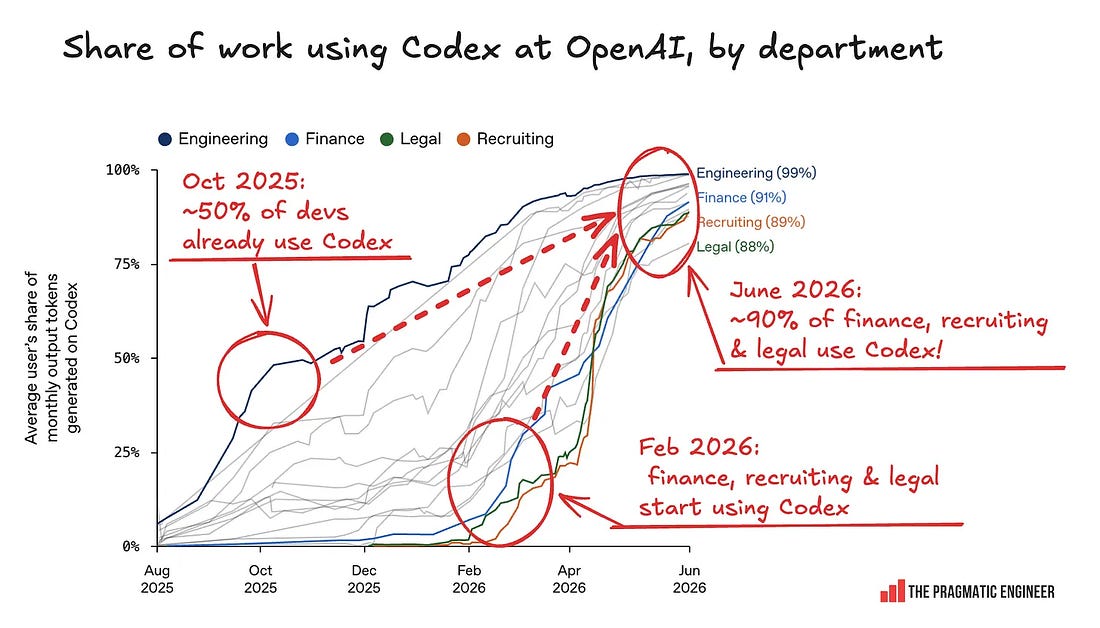
Craft Docs seemed early to a trend that has become more widespread, by having both their own engineering and non-engineering folks onboard to an AI harness. Now, there are signs other companies are doing the same: at OpenAI, non-engineering units like finance, recruitment, and legal moved over to Codex in June 2026:
In some ways, it could be comforting to know that it’s not only software engineering where the tools and workflows are quickly changing: every other function in tech is experiencing the same! It’s messy right nowJust last weekend, a rant by an anonymous engineer in Big Tech hit a nerve with many people in the industry. An engineer with the username voxium posted (emphasis mine):
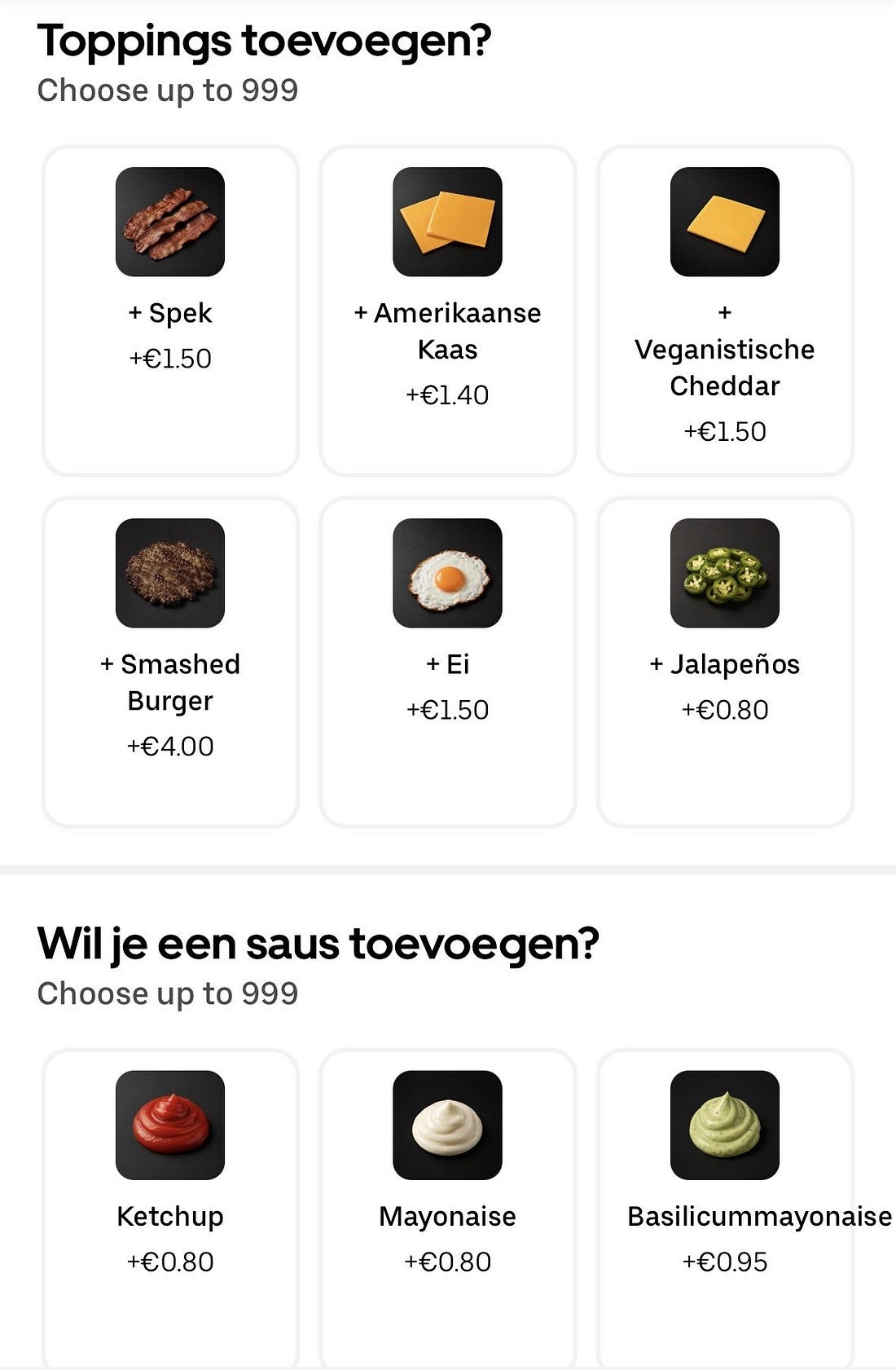
This post rings true because it is happening at many places where there’s more AI usage, engineers do “outsource” thinking to LLMs, and end up not caring about anything else except shipping something to production. Quality in declineSince the beginning of the year, the quality of software has been degrading pretty much everywhere, much of it caused by over-reliance on AI, or perhaps more accurately, the outsourcing of thinking and decision making to AI. In July, I moved my video podcast off of Spotify after a series of unexplainable outages, and Spotify’s engineering team seemed to take no real pride or accountability in fixing the root causes of the issue. Only this week, Uber shipped a new feature to production in the Uber Eats app – a new way to select extras with your food order – with seemingly no QA testing:
Inside this new “add-ons selector” in Uber Eats, I noticed three bugs at once:
I’ve used the Uber Eats app for years, and this was the first time I saw such a sloppy feature release. I assume that devs and PMs building it have all “checked out”, stopped doing proper QA, and assume that the agent will take care of all of it. There’s no other way to explain three bugs shipped to all customers but seemingly noticed by nobody until I posted about it. To the Uber Eats team’s credit, they reached out and are looking into fixing all three issues. Software engineering to be more important than everI’m personally past the shock and grief stages of agents taking over the activity of coding. At first, I assumed this change would reduce the amount of work for engineers. But, counter-intuitively, that actually seems to be growing:
New categories of systems and products will be built by engineers who “get” LLMs and AI engineering. We are seeing the majority of venture funding pour into AI companies because AI creates new business models, new revenue streams, and disrupts “traditional” software. For example, who would have thought that companies would spend tens of thousands of dollars, per engineer, on AI coding tools? Or that the category of AI inference providers would become as massive as it already is from barely existing two years ago? This technological change will re-jig parts of the tech industry: the winners will surely win big, and teams and companies choosing inaction could be out-executed and displaced by nimble competitors. And in many ways, this is great news for us software engineers who keep up with the technology. Companies are now investing in innovation and are willing to pay top-of-market for software engineers who can help them build AI products or become AI-native. Read the full issue of The Pulse this is from, or check out this week’s The Pulse. This week’s issue covers:
You’re on the free list for The Pragmatic Engineer. For the full experience, become a paying subscriber. Many readers expense this newsletter within their company’s training/learning/development budget. If you have such a budget, here’s an email you could send to your manager. This post is public, so feel free to share and forward it. If you enjoyed this post, you might enjoy my book, The Software Engineer's Guidebook: navigating senior, tech lead, staff and principal positions at tech companies and startups.
|




Comments
Post a Comment