Impressions from visiting OpenAI, Anthropic, & Cursor

👋 Hi, this is Gergely with a subscriber-only issue of the Pragmatic Engineer Newsletter. In every issue, I cover challenges at Big Tech and startups through the lens of engineering managers and senior engineers. If you’ve been forwarded this email, you can subscribe here. Impressions from visiting OpenAI, Anthropic, & CursorA peek into where software engineering is headed from inside the sector’s leading AI labs. Agents running in the cloud are a major trend, while coding harnesses are spreading beyond the craft
Scheduling note: this week, I’m in San Francisco at the AI Engineer’s World Fair, so there won’t be an edition of The Pulse on Thursday. However, tomorrow (Wednesday) there will be a special podcast episode – the lengthiest, most detailed one yet – with software engineering legend, Kent Beck. In recent days, I’ve visited the offices of OpenAI, Anthropic, and Cursor, in San Francisco. Onsite, I talked with software folks working on the model side to learn more about how their way of building software is changing. This article is based on observations from those visits, including some new developments that I reckon may be adopted industry-wide. We cover:
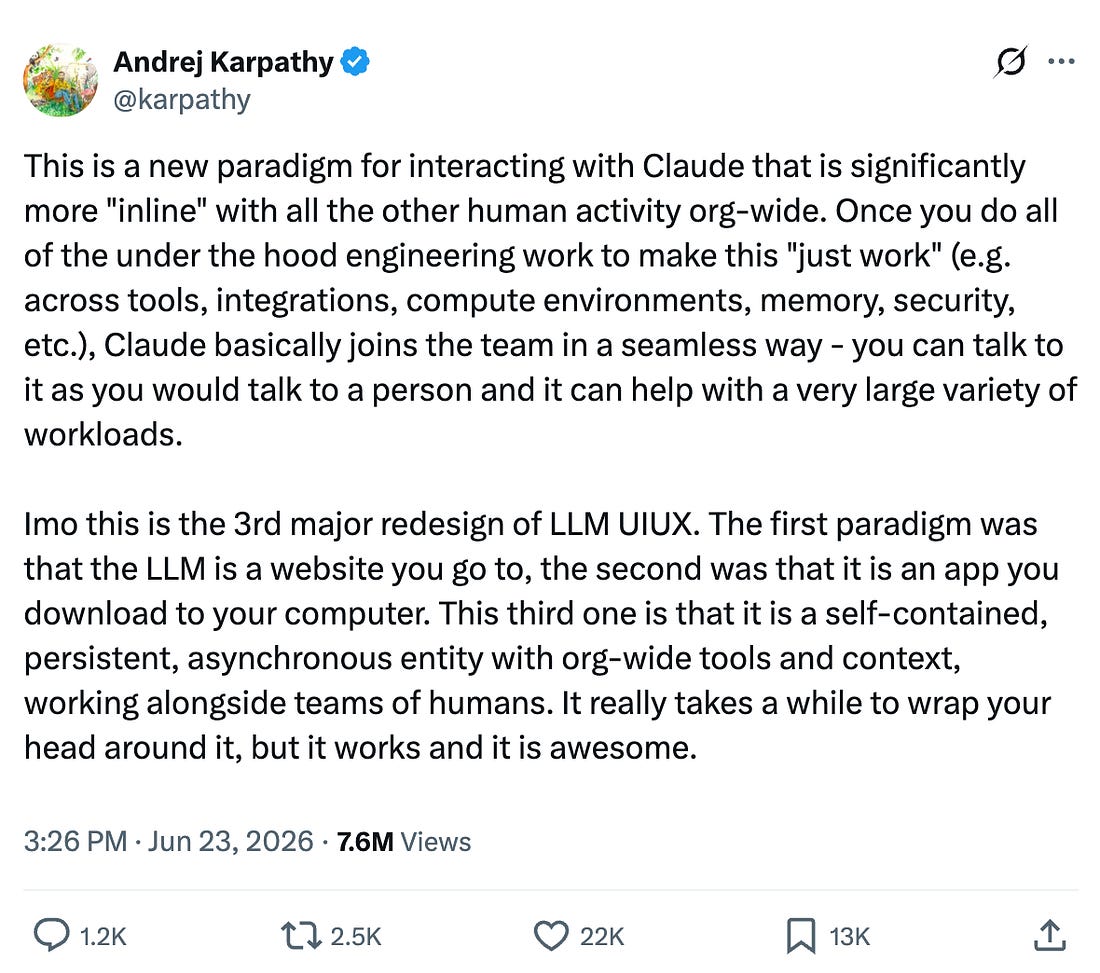
1. Next mega-trend? Agents running in the cloud to go mainstreamLast week, Andrej Karpathy employed the phrase “new paradigm” to describe using Claude Tag – a way to mention Claude in Slack and have it kick off tasks – to work with AI:
There was plenty of pushback against this claim on social media; after all, it’s just a Slack integration with Claude, right? I also thought this until I asked David Hershey at Anthropic’s Applied AI unit about it while visiting the company’s offices. He explained in detail what makes this particular Slack integration different from using something like Claude Code:
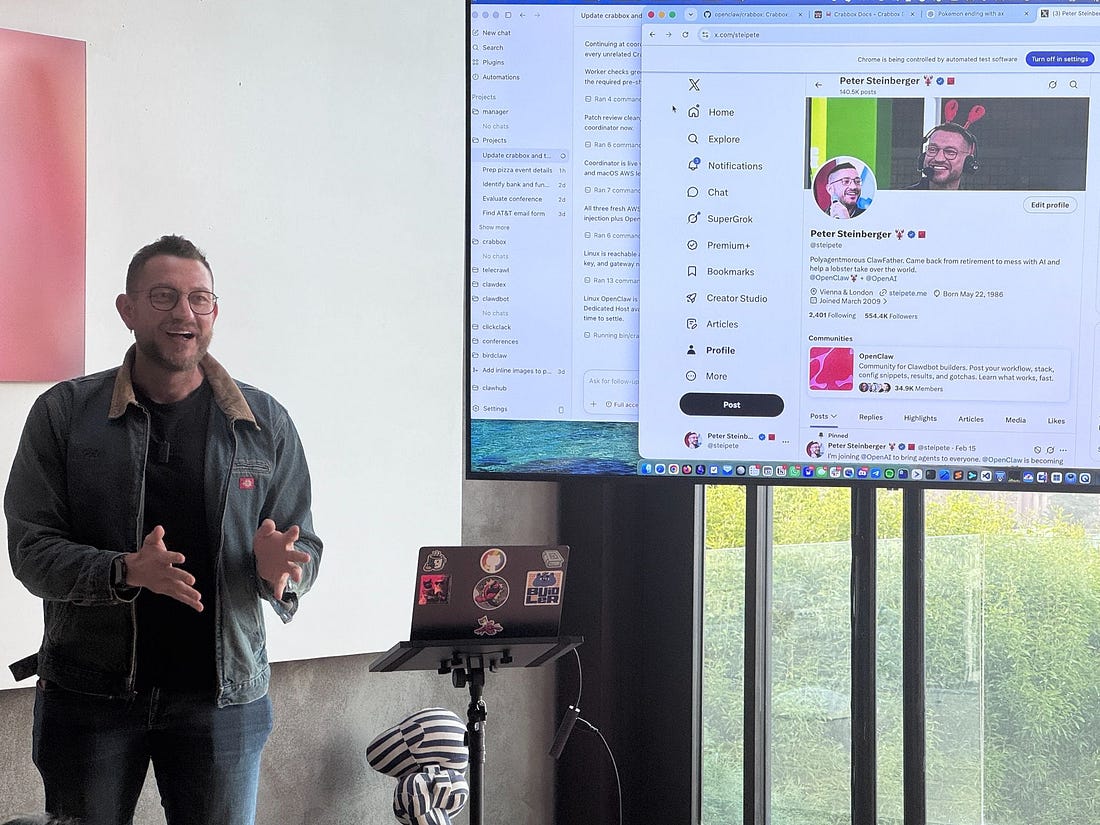
My sense is that the excitement here is less about the Slack integration itself, and more to do with the fact that it’s easy to kick off one or more AIs that no longer run on a local machine. You can skip the setup entirely. ‘Claude Managed Agents’ is a big focus at Anthropic. While there, I met Katelyn Lesse, head of engineering for Claude Platform, who explained that Claude Managed Agents is a large, complex project which her team built over a six-month period. It’s a hosted service to execute long-running agents on various cloud providers. Cloud agents are the “big deal”, not the Slack integrationAlso last week, I had the opportunity to attend a private AI builders event, where Peter Steinberger discussed his workflow.
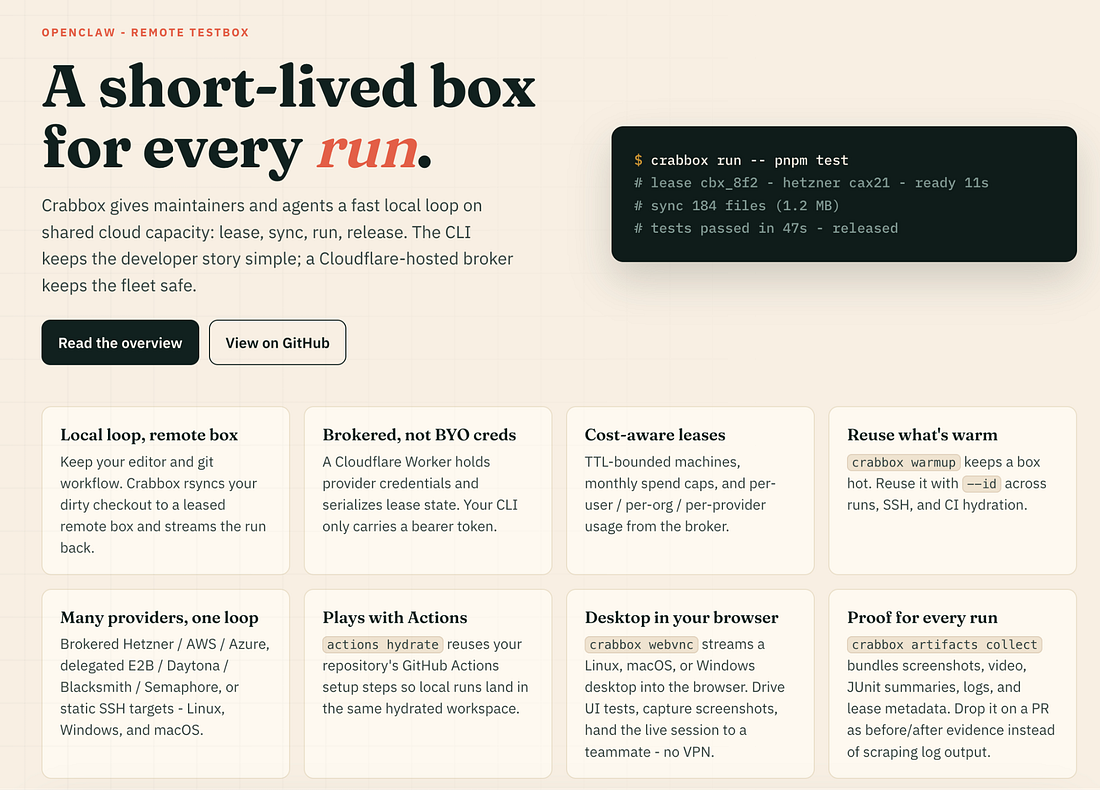
He talked about how he has gotten really tired of having several OpenClaw agents running on his local machine, which heat up the CPU and slow down his whole system. So, he built Crabbox as a way to run OpenClaw agents in the cloud:
Suddenly, the same solution of cloud agents has emerged in separate places – at Anthropic and with Peter’s OpenClaw – in response to issues caused by locally-running agents. I also learned that cloud agents are becoming a big deal at OpenAI and Cursor, too. OpenAI bets big on Cloud AgentsOpenAI acquired Ona, (formerly Gitpod), the leader in cloud development environments (CDEs). Back in 2021, CDEs were built for developers to develop software faster, and they also happen to be the perfect primitive for agents to run in a sandboxed cloud environment. From the acquisition announcement by OpenAI (emphasis mine):
At OpenAI’s offices, I asked engineers there if their focus is shifting to cloud-based agents. Their answer: it very much is. This is a fairly recent development and they’re hiring engineers for the Cloud Agents team. Here’s one job ad that’s currently live:
Cursor: running agents in the cloud is the futureAt Cursor, I spent an hour with cofounder Sualeh Asif (formerly the CTO, now Chief Product Officer). Cursor released Cloud Agents at the end of last year, and is starting to focus a lot more on this area. Sualeh revealed some interesting details about working with cloud agents:
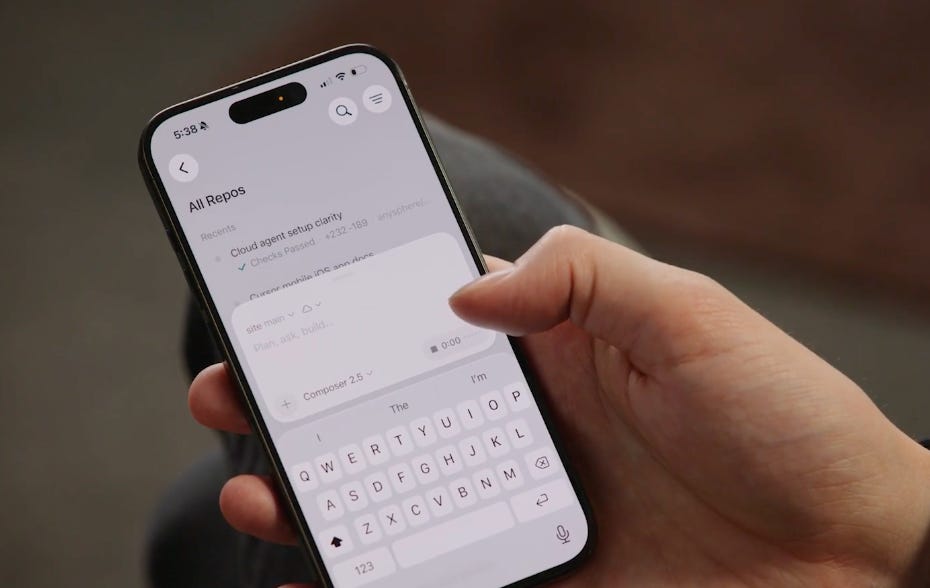
Only yesterday, (Monday, 29 June), Cursor launched its iOS app that enables the building of software from anywhere.
This product is built on top of cloud agents to allow for long-running tasks, the company said:
Why are cloud agents suddenly a thing?It figures that running AI agents in the cloud is practical: there’s less setup involved, several can run in parallel, and the cloud is a better, more convenient place for long-running agents than a personal laptop is; i.e., having to keep the lid open even when walking around the office. But why is this happening now? My hypothesis is that a mix of factors are at play:
2. Mass adoption of coding harnesses by non-developers?At OpenAI, I also met Andrew Ambrosino, who was the first engineer on the Codex team. Our time together got off to an ideal start, with Andrew saying he needed to show me something incredible:... Subscribe to The Pragmatic Engineer to unlock the rest.Become a paying subscriber of The Pragmatic Engineer to get access to this post and other subscriber-only content. A subscription gets you:
|




Comments
Post a Comment